 Kyoto City Guide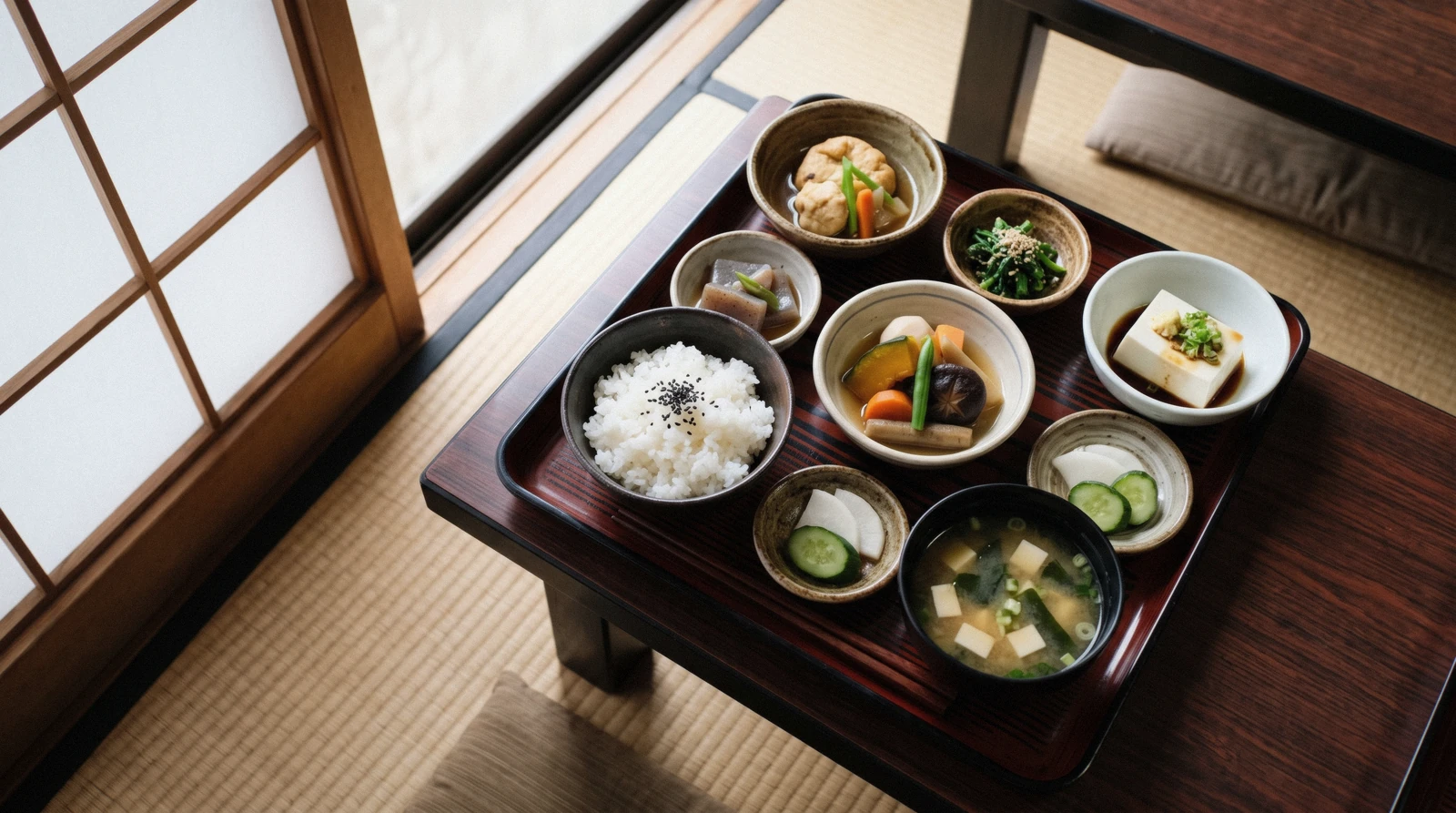
Vegetarian and Vegan in Kyoto
Kyoto vegetarian eating is easier than anywhere else in Japan and harder than it first appears. The city has a thirteen-hundred-year tradition of Buddhist temple cuisine that is genuinely vegan by construction, plus a tofu and yuba industry that exists because monks needed protein — and it also has bonito dashi in almost every bowl, sauce and dressing that is not explicitly temple food. This page sets out what is safe, where the fish hides, and the sentences to say. The wider eating guide is on where to eat, and the city on the Kyoto city guide homepage.
Quick answer What is safe, where the fish hides — in four lines
Shojin ryori, the Buddhist temple cuisine served at several Kyoto temples, contains no meat, no fish and no bonito dashi, and is the one reliably vegan meal in the city. Outside it, assume that miso soup, simmered vegetables, tempura dipping sauce, noodle broth and most dressings contain katsuo-dashi made from dried bonito. Tofu, yuba and pickle specialists are the other safe categories.
Key takeaways
- "Vegetarian" is often understood here as "no visible meat" — the dashi question has to be asked separately, and the phrases below do it
- Tenryu-ji runs a shojin ryori restaurant inside its own grounds, which means a temple ticket is part of the price
- Yuba — the skin lifted off simmering soy milk — is a Kyoto speciality and is naturally vegan; so is nama-fu, wheat gluten
- Nishiki Market's pickle, yuba and fu counters are the easiest plant-based grazing in the city
What is safe, what is not, and what needs asking
Based on how each dish is normally made in Kyoto kitchens; individual restaurants vary and the only reliable method is to ask. Prices are typical menu bands read on 30 August 2026 and converted at ¥160 = $1.
| Dish or category | Vegan? | Typical price | The catch |
|---|---|---|---|
| Shojin ryori (temple cuisine) | Yes, by construction | $19–44 (¥3,000–7,000) | No meat, fish or bonito dashi; traditionally no onion or garlic either |
| Yuba dishes | Usually | $12–25 (¥2,000–4,000) | Ask about the dipping sauce and any dashi in the simmering liquid |
| Yudofu (simmered tofu) | Usually not | $15–31 (¥2,400–5,000) | The pot broth is often kombu, but the dipping sauce is usually bonito |
| Miso soup | Usually not | Included | Standard dashi is bonito; kombu-only versions exist on request |
| Obanzai vegetable dishes | Usually not | $6–12 (¥1,000–2,000) | Simmered in dashi as a matter of course |
| Vegetable tempura | Batter usually yes | $9–19 (¥1,500–3,000) | The tentsuyu dipping sauce contains dashi; salt is the safe alternative |
| Soba and udon | Noodles usually yes | $6–12 (¥1,000–2,000) | The broth is dashi; ask for zaru (cold, dipped) and check the dip |
| Pickles (tsukemono) | Usually yes | $2–6 (¥300–1,000) | A few are cured with bonito flakes — ask at the counter |
| Matcha and wagashi | Usually yes | $6–12 (¥1,000–2,000) | Some sweets use gelatine; agar is the traditional setting agent |
The single most useful habit: assume dashi unless the restaurant is a temple one, and ask before ordering rather than after. Kyoto kitchens are used to the question and will usually tell you plainly rather than reassure you.
Shojin ryori, the food Buddhism built
A cuisine designed under a prohibition, which is why it is the one style here that needs no negotiation.
When Buddhism arrived in Japan it brought a prohibition on killing, and the monasteries developed a cuisine around it: no meat, no fish, no dashi made from anything that had swum, and traditionally none of the five pungent roots — onion, garlic, leek, chive, asafoetida — held to inflame the senses. What is left is vegetables, tofu in every form, sesame, seaweed, wheat gluten and pickles, cooked with a precision that turned scarcity into technique.
Two Kyoto products come directly out of it. Yuba is the skin that forms on simmering soy milk, lifted off in sheets — protein-dense, delicate, and a luxury ingredient in its own right. Nama-fu is wheat gluten steamed into cakes, often coloured and shaped by season, and it is the closest thing Japanese cooking has to a meat substitute that predates the concept.
Where to eat it: Tenryu-ji runs Shigetsu inside its own grounds, which is the best-known and requires a temple ticket to reach. Several temples around Nanzen-ji specialise in yudofu, and the Daitoku-ji sub-temples in the north have their own restaurants. Book ahead; these are small rooms with fixed sittings.
What to say
Four sentences that do the work. The dashi one is the only one that really matters.
- Bejitarian desu — ベジタリアンです — "I am vegetarian." Understood, but often taken to mean "no visible meat".
- Katsuo-dashi wa haitte imasu ka? — かつおだしは入っていますか — "Does this contain bonito dashi?" This is the question that actually decides things.
- Niku to sakana wa taberaremasen — 肉と魚は食べられません — "I cannot eat meat or fish." Plainer than the word vegetarian and more reliably understood.
- Kombu-dashi dake de onegai dekimasu ka? — 昆布だしだけでお願いできますか — "Could you use kelp dashi only?" Often possible, especially at breakfast and in tofu restaurants.
Plant-based-friendly experiences
Tea ceremonies and most sweets are naturally free of animal ingredients; cooking classes will usually adapt if told in advance. Prices are the platform's listings in USD, read on 30 August 2026.
 from $28.11
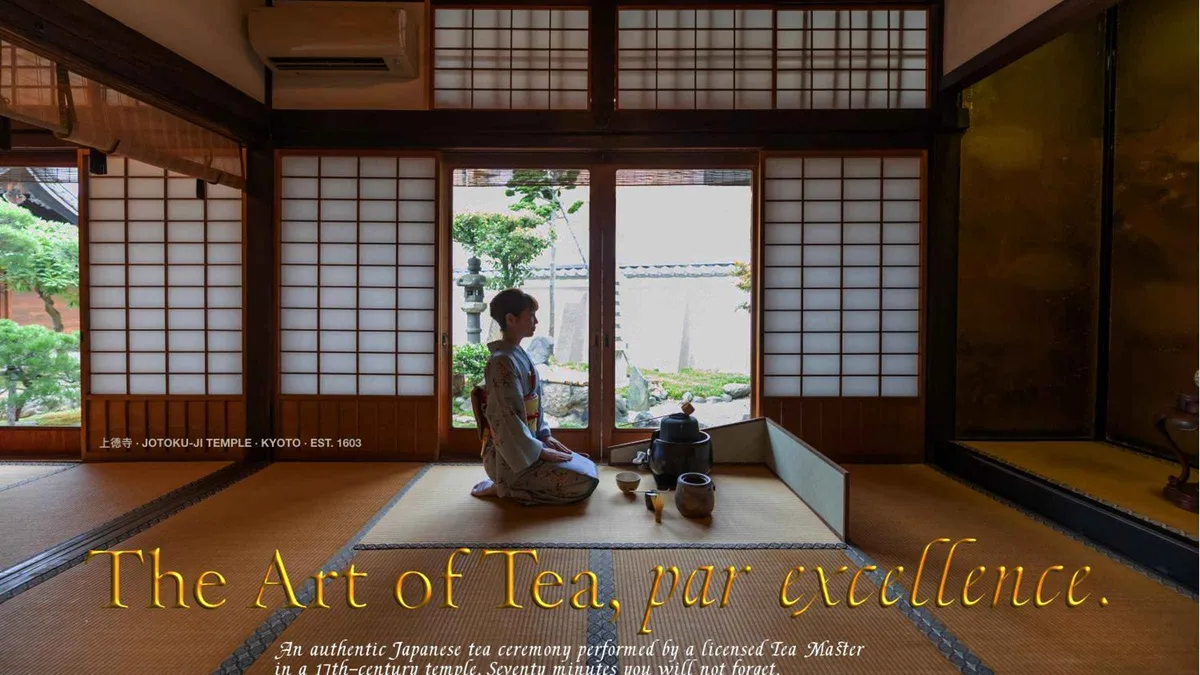
Kyoto: Tea Ceremony Ju-An at Jotokuji Temple
Listing details checked 2026-08-30
Seventy minutes of the real chanoyu ritual inside Jotokuji Temple, with the meaning of each movement explained. The most-reviewed tea ceremony in the city and among the cheapest.
- Take part in a traditional Japanese tea drinking ceremony
- Marvel at the architecture of the Jotokuji Temple
- Get the chance to experience this ancient ceremony
 from $48.10
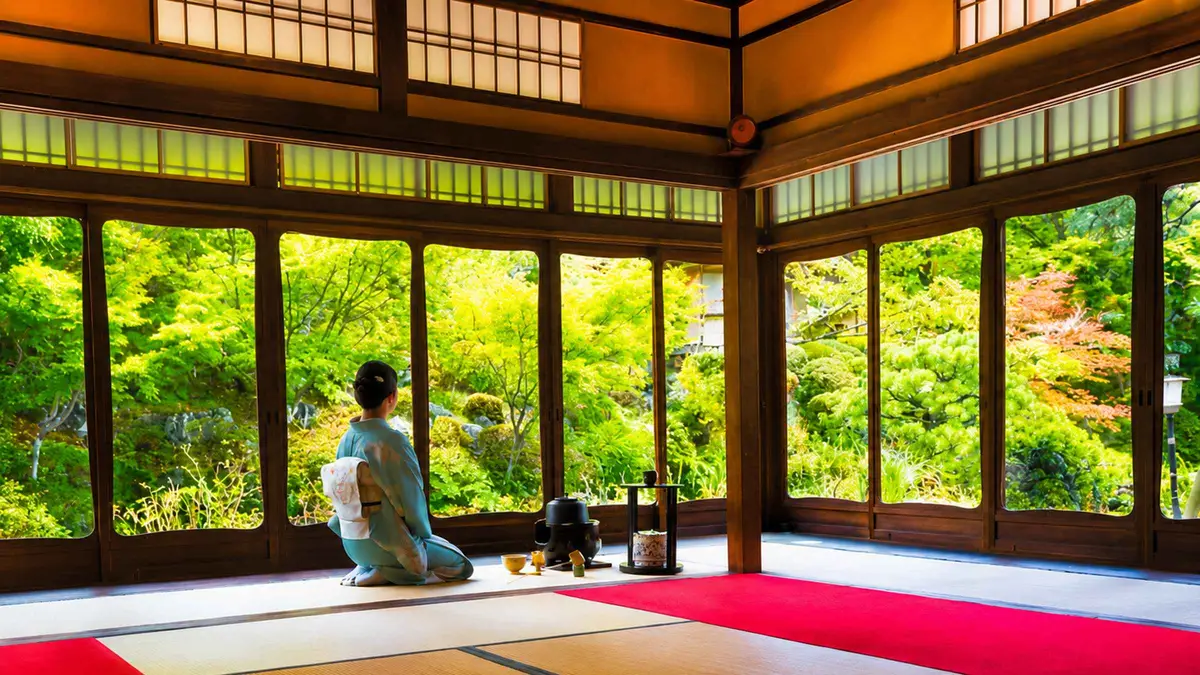
Kyoto: Tea Ceremony in a Garden Tea House near Kiyomizu-dera
Listing details checked 2026-08-30
Forty-five minutes in a garden tea house minutes from Kiyomizu-dera: two bowls of Uji matcha, one made for you and one you whisk yourself, with a wagashi. Small groups, and it books out in the blossom weeks.
- Savor Japan's changing seasons in the timeless elegance of our historic garden
- Experience an authentic Japanese tea ceremony overlooking a beautiful garden
- Immerse yourself in a tranquil Zen atmosphere and the tea master's graceful art
- Enjoy a traditional Japanese sweet and matcha prepared by our tea master
 from $59.34
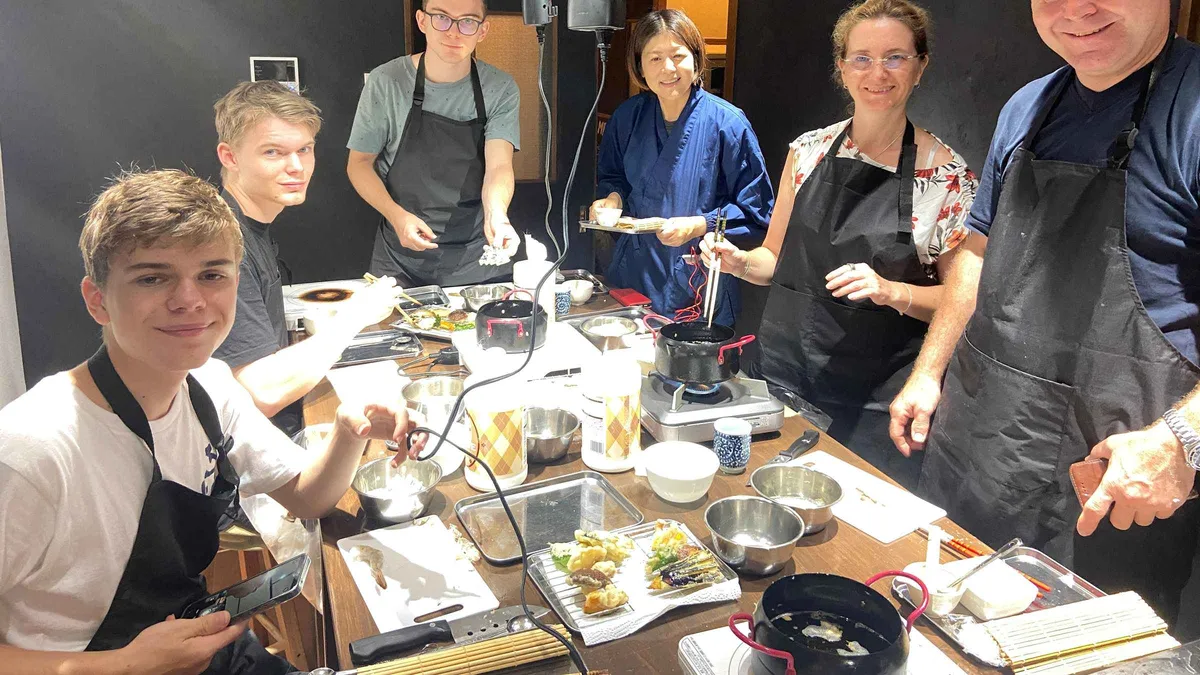
Kyoto: Japanese Washoku Bento Small Group Cooking Class
Listing details checked 2026-08-30
A small-group class that builds a full bento: sushi rolls, tempura, tofu salad and tamagoyaki, in two and a half hours. The most useful cooking class here for home cooks.
- Taste traditional Japanese flavors and try the dishes that make up a bento box
- Learn techniques for how to fry tempura and make dashi stock from a local chef
- Improve your knife skills and learn proper Japanese approach during this class
- Discover washoku cuisine, which emphasizes fresh and seasonal ingredients
 from $49.97
Kyoto: Nishiki Market Food Tour - 7 Tastings
Listing details checked 2026-08-30
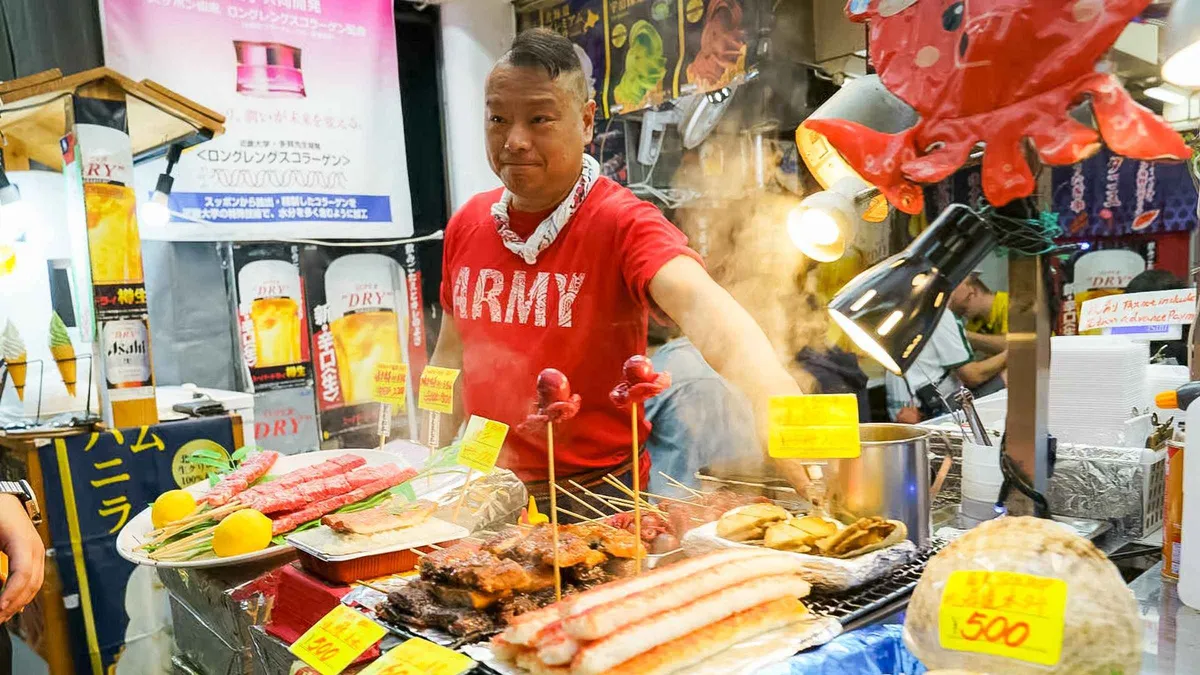
Seven tastings through Nishiki and on into Gion, with the market's history and its role in Kyoto cooking explained. Three hours at the lowest price of the three.
- Satisfy your taste buds with a variety of local delicacies at Nishiki Market
- Learn about the market's history and its influence on Kyoto's cuisine
- Explore the bustling stalls and narrow alleys of Gion
- Discover unique ingredients essential to Kyoto-style cooking
 from $21.64
Kyoto: Tea Ceremony in 100-year-old Kyo-Machiya Townhouse
Listing details checked 2026-08-30
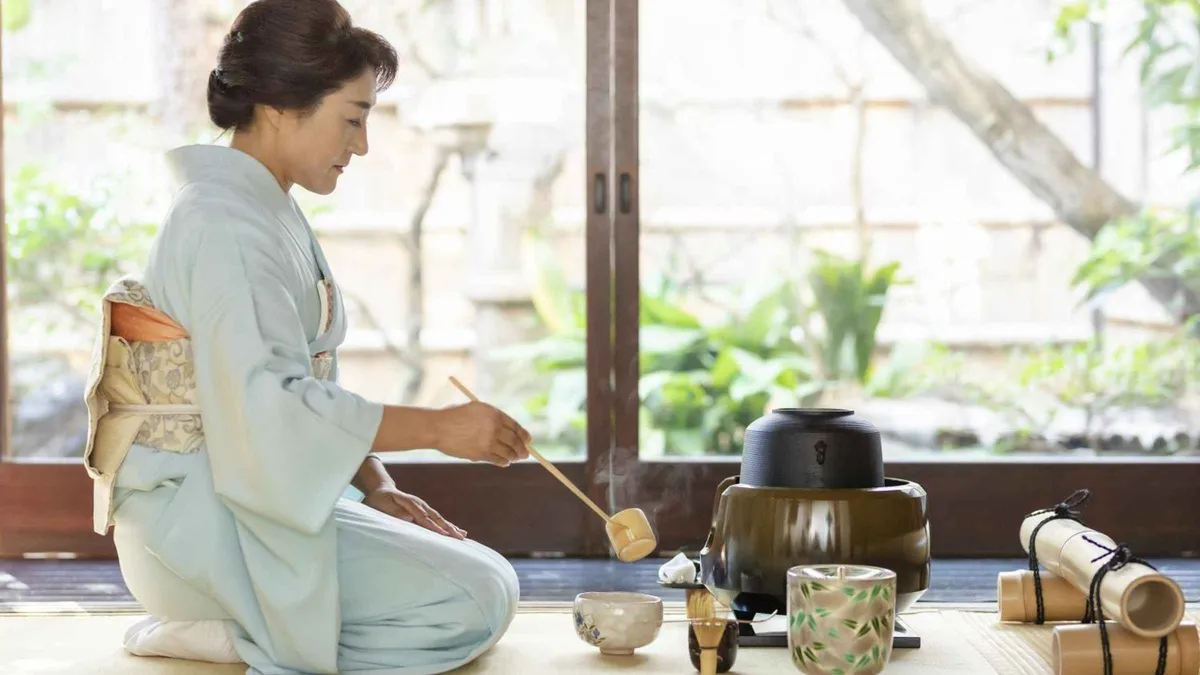
Fifty minutes with a tea master in a hundred-year-old townhouse, matcha and a seasonal sweet included. Short, cheap and genuinely instructional rather than a demonstration.
- Get an introduction to a Japanese tea ceremony with an experienced master
- Enjoy getting to prepare your own tea under the master's supervision
- Experience an authentic Japanese atmosphere in an old machiya town house
- Savor some tasty matcha tea along with some traditional Japanese sweets
Where to eat, district by district
The plant-based map is not the same as the general eating map.
Arashiyama and Nanzen-ji are the tofu and yuba districts — both grew up around temples that ate this way, and both have a run of specialist restaurants where the whole menu is built on soy.
Nishiki Market is the easiest grazing: yuba counters, fu shops, pickle houses that will let you taste, and roasted chestnuts and sweets in season. Remember the market's own request not to eat while walking.
Downtown has the modern layer — a growing set of explicitly vegan cafés and ramen bars around Karasuma and Kawaramachi, which are the safest option if you would rather not negotiate at all.
Convenience stores are the backstop everywhere: onigiri with umeboshi or kombu, edamame, plain tofu, fruit, and packaged salads with the dressing separate. Read the labels — dashi appears in more of them than you would expect.
Where to go next
Three pages that follow from a meal.
Where to eat in Kyoto
Districts, prices, reservation tiers and what Kyoto's own cooking actually is.
The full guideNishiki Market
The yuba, fu and pickle counters, and the association's request about eating on the move.
The marketTenryu-ji
Shigetsu serves shojin ryori inside the temple grounds — a ticket is part of the price.
The temple restaurantVegetarian and vegan Kyoto: the questions
Is it easy to be vegetarian in Kyoto?
Easier than anywhere else in Japan, because of the temple-cuisine tradition and the tofu and yuba industry that grew from it — but not automatic. Bonito dashi is in most soups, simmered dishes, noodle broths and dipping sauces that look entirely vegetable-based. The safety table sets out which is which.
What is shojin ryori?
Buddhist temple cuisine: no meat, no fish, no bonito dashi, and traditionally none of the five pungent roots. It is the one style of Japanese cooking that is vegan by construction rather than by adaptation, and Kyoto is where to eat it — Tenryu-ji runs a well-known restaurant inside its own grounds.
How do you ask if food contains fish stock in Japan?
"Katsuo-dashi wa haitte imasu ka?" — かつおだしは入っていますか — does the work. Saying only that you are vegetarian is often understood as "no visible meat". The four phrases cover the rest.
Is miso soup vegetarian in Japan?
Usually not. Standard miso soup is made with bonito dashi. Some restaurants keep a kombu-only version and will make it on request, particularly tofu specialists and temple restaurants, but the default in an ordinary set meal contains fish.
What can vegans buy at the covered food arcade?
Yuba, nama-fu, most tsukemono pickles, roasted chestnuts, sesame sweets and plenty of fresh produce. Ask at the pickle counters — a few varieties are cured with bonito flakes. The market asks you to eat at the shop rather than while walking.
Are there vegan restaurants in Kyoto?
Yes, a growing set of explicitly vegan cafés and ramen bars around Karasuma and Kawaramachi downtown, alongside the traditional temple restaurants. If you would rather not negotiate with a kitchen at all, those are the ones to look for.
Page last reviewed 2026-08-30. Prices, hours and terms are set by the venue or operator and confirmed at checkout.
We may earn a commission if you book through one of our links, at no extra cost to you. Full affiliate disclosure