 Kyoto City Guide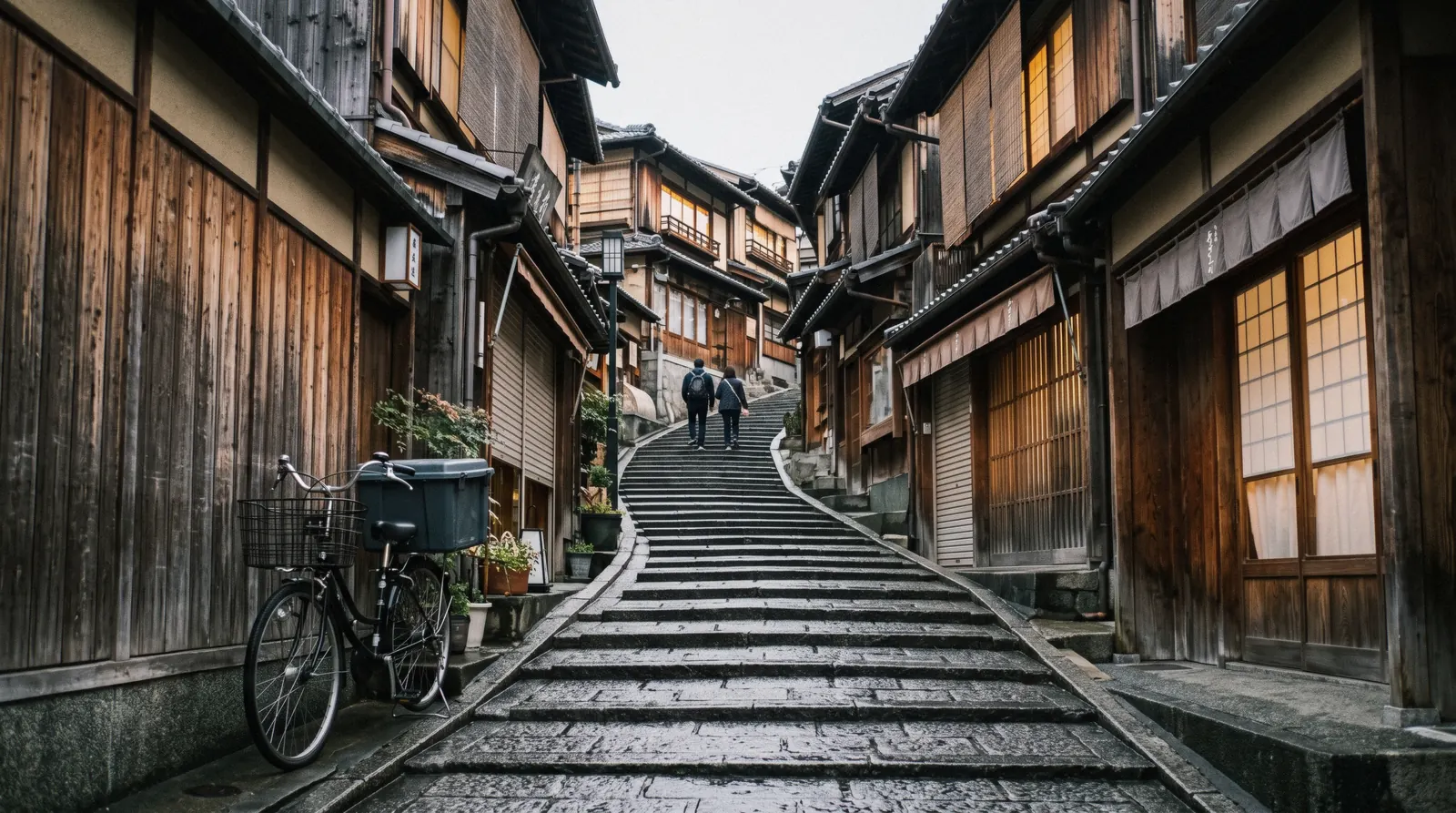
Higashiyama
Higashiyama Kyoto is the strip of hillside between Kiyomizu-dera and Yasaka Shrine where the city looks like the thing people come to see: stone-stepped lanes, wooden machiya, tiled roofs falling away towards the basin, and a pagoda at the end of the view. It is a protected district rather than an attraction, it costs nothing to walk, and the entire experience depends on being in it before the shops open. This page has the route, the paid stops along it and the timing. The other districts are on the neighbourhoods hub, and the city on the Kyoto city guide homepage.
Quick answer Free to walk, downhill from Kiyomizu, before 08:30 — in four lines
Higashiyama is a preserved district, not a sight: the lanes are public, free and open at every hour, and the shops along them trade from about 10:00 to between 17:00 and 18:00. The classic walk runs downhill from Kiyomizu-dera through Sannenzaka and Ninenzaka to Yasaka Shrine and Gion, and takes about 90 minutes with stops.
Key takeaways
- Walk it downhill and early: Kiyomizu-dera opens at 06:00, and the lanes below belong to residents and delivery vans until about 08:30
- The paid stops worth adding are Kodai-ji and, at the bottom, Kennin-ji — everything else on the route is free
- Sannenzaka's steps are genuinely slippery in rain and there is a local superstition about falling on them; the surface is worn stone, not decoration
- It ends in Gion, which is why the eastern day works best as one continuous downhill walk rather than three bus rides
The walk, stop by stop and priced
The standard route from the top of the hill to the bottom, with adult admissions read from each venue's own site on 30 August 2026 and converted at ¥160 = $1. Walking times are ours, measured at an unhurried pace.
| Stop | Price | Walk on | Time there | Note |
|---|---|---|---|---|
| Kiyomizu-dera | Not published by the temple | 5 min | 60–90 min | Opens 06:00 — the reason to start here |
| Sannenzaka | Free | 5 min | 20 min | Stone steps, preserved machiya, shops from 10:00 |
| Ninenzaka | Free | 6 min | 15 min | The continuation; a Starbucks in a townhouse with tatami |
| Kodai-ji | $5 (¥800) | 8 min | 45 min | Nene's temple: gardens, bamboo, autumn illumination |
| Ishibei-koji | Free | 4 min | 10 min | One stone lane, no shops, the quietest corner of the quarter |
| Nene-no-Michi | Free | 6 min | 15 min | The paved approach linking Kodai-ji to Maruyama Park |
| Yasaka Shrine and Maruyama Park | Free | 3 min | 30 min | Open at every hour; the park is Kyoto's blossom picnic ground |
| Gion | Free | — | 60–90 min | Best at dusk, which is when this walk should end |
Total on foot, top to bottom, is about 2.5 kilometres and 35 minutes of pure walking. Everything else is stopping time, and the difference between doing this in two hours and in five is entirely how many gardens you pay for.
Guided walks through Higashiyama
Prices are the platform's listings in USD, read on 30 August 2026; the operator charges in your own currency at checkout.
 from $23.49
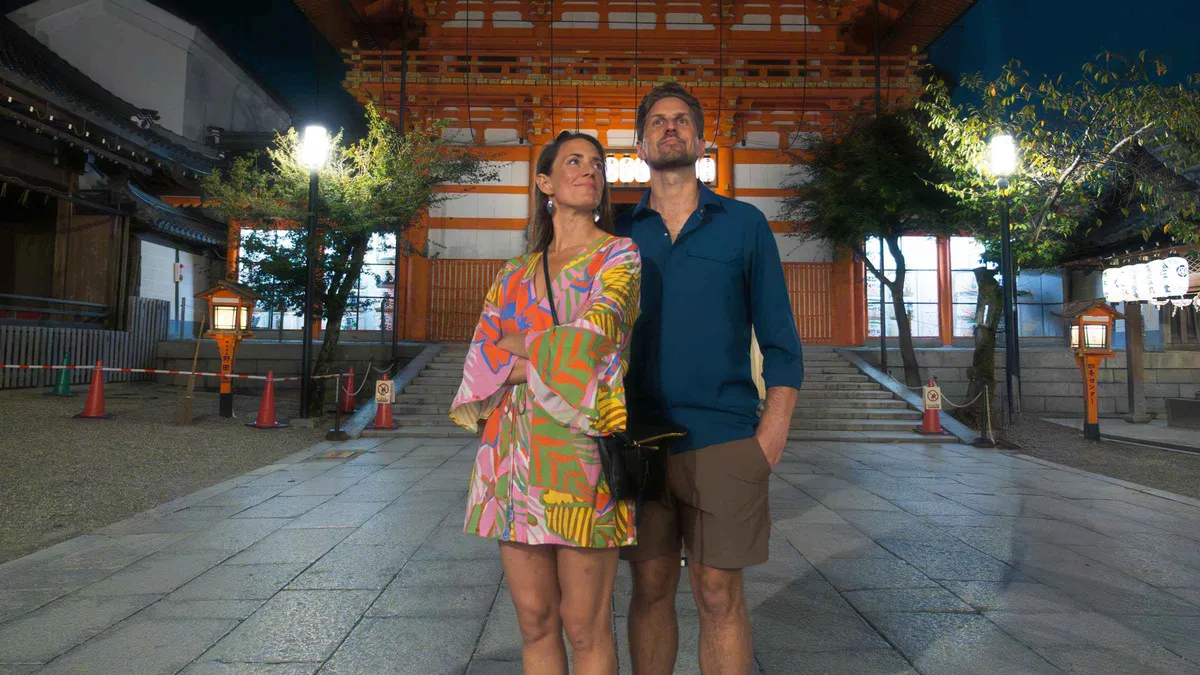
Kyoto: Gion Geisha District Night Walking Tour
Listing details checked 2026-08-30
Gion and Higashiyama after dark with a bilingual guide, ending with a digital list of the guide's own recommendations. Two hours, and it covers more ground than the Gion-only walks.
- Explore Kyoto’s historic Gion district at night
- Small-group experience limited to 8 guests
- Learn authentic insights into geiko and maiko culture
- Receive a digital Kyoto guide with local recommendations
 from $18.74
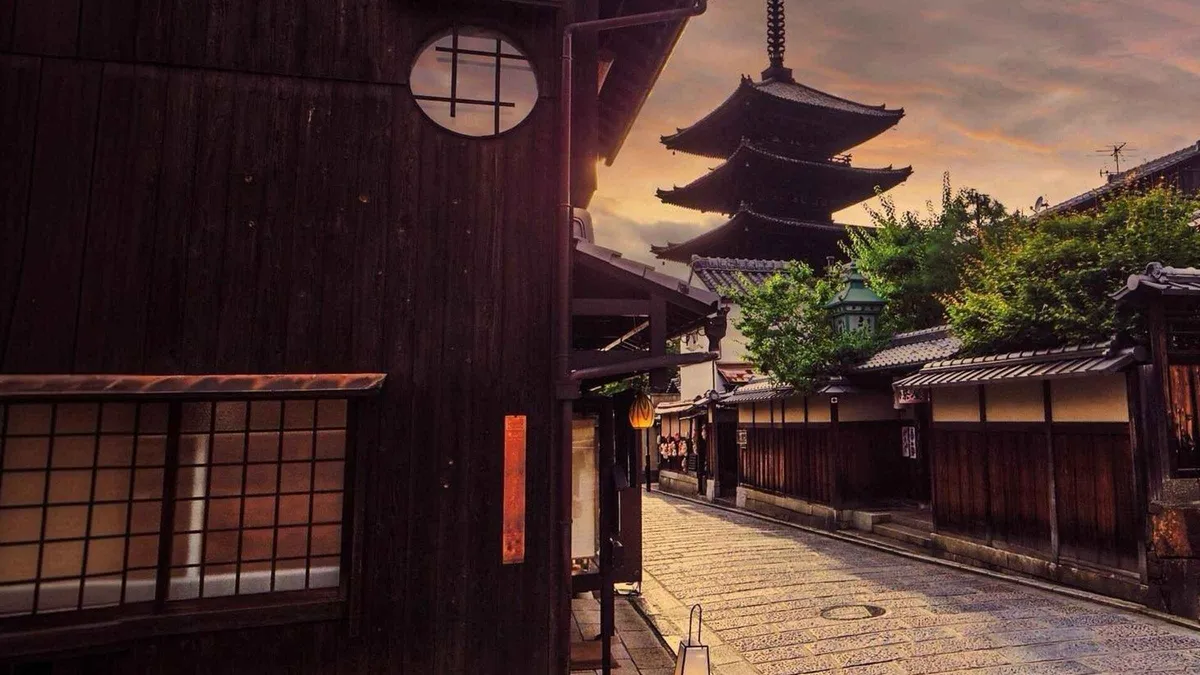
Kyoto: Gion Geisha District & Hidden Gems Walking Tour
Listing details checked 2026-08-30
Gion's most reviewed walk, and it starts at Shirakawa rather than the crowded lane. Two hours through Hanamikoji, Yasui Kompira-gu, Hokan-ji and Nene-no-Michi with a guide who explains what the ochaya actually are.
- Immerse yourself in the enchanting atmosphere of Gion
- Stroll the real Gion streets that inspired the world's most famous geisha story
- See elegantly dressed Geisha as they make their way to appointments
- Discover hidden gems along the way at off the beaten path spots
 from $52.47
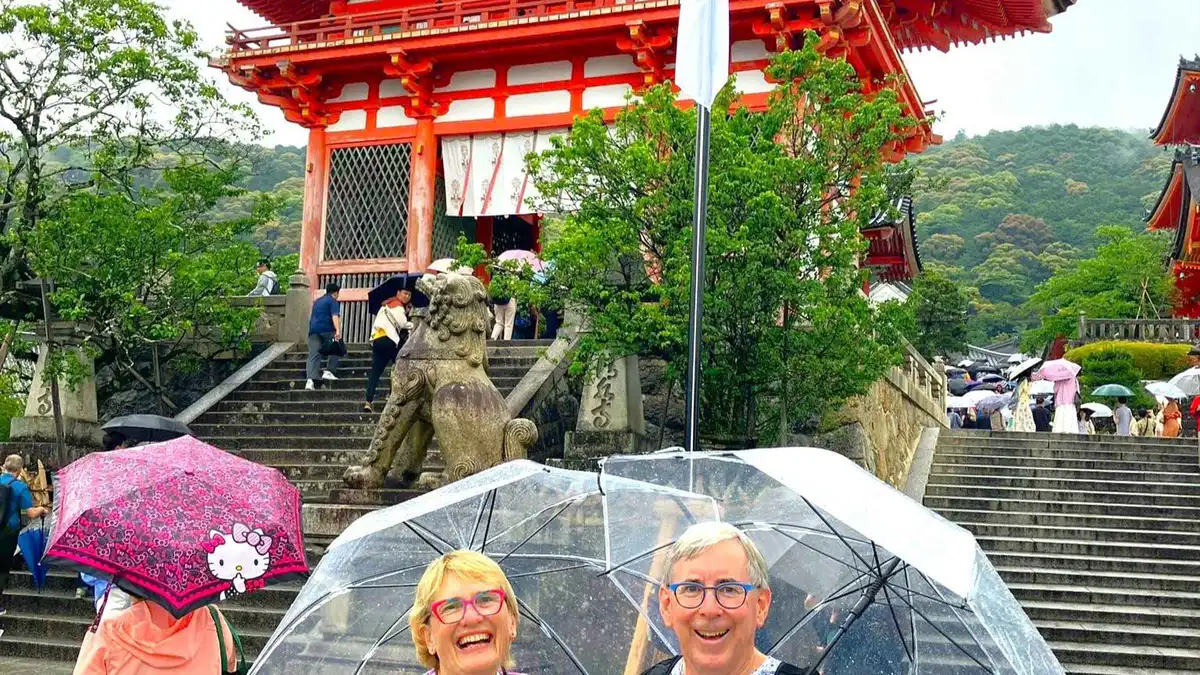
Kyoto: Kiyomizu-dera UNESCO Guided Tour
Listing details checked 2026-08-30
Ninety minutes inside Kiyomizu-dera with admission included and a choice of an early-morning or afternoon departure. The morning slot exists because the temple opens at 06:00.
- Explore Kiyomizu-dera, a UNESCO World Heritage Site
- See the famous wooden stage built entirely without nails
- Enjoy panoramic views over Kyoto from the main hall
- Choose early morning or afternoon departure options
 from $55
Kyoto: Morning Highlights E-Bike Tour
Listing details checked 2026-08-30
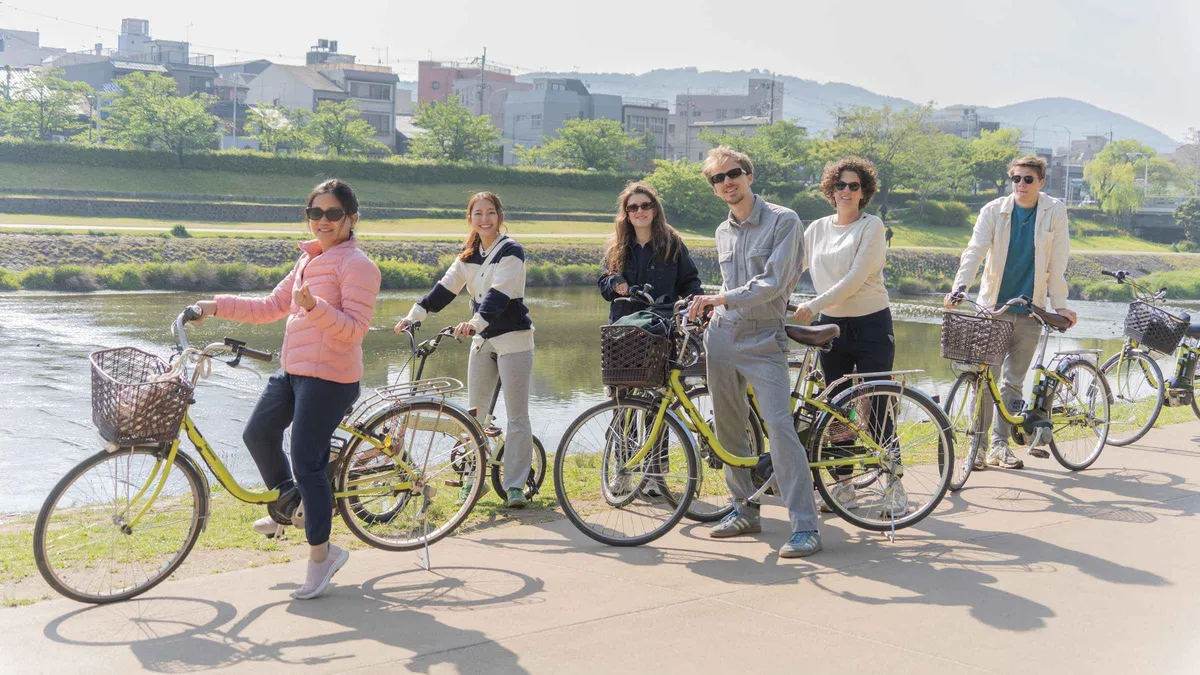
Two and a half morning hours by e-bike across Kiyomizu-dera, Gion and Fushimi Inari, entry tickets included. Covers ground on the hills that would cost you an hour on foot.
- Discover Kyoto's must-see sights without the crowds
- Enjoy a small-group experience for a personal touch
- Learn local history and cultural insights from a Japanese guide
- Cycle around Kyoto's highlights
 from $48.10
Kyoto: Tea Ceremony in a Garden Tea House near Kiyomizu-dera
Listing details checked 2026-08-30
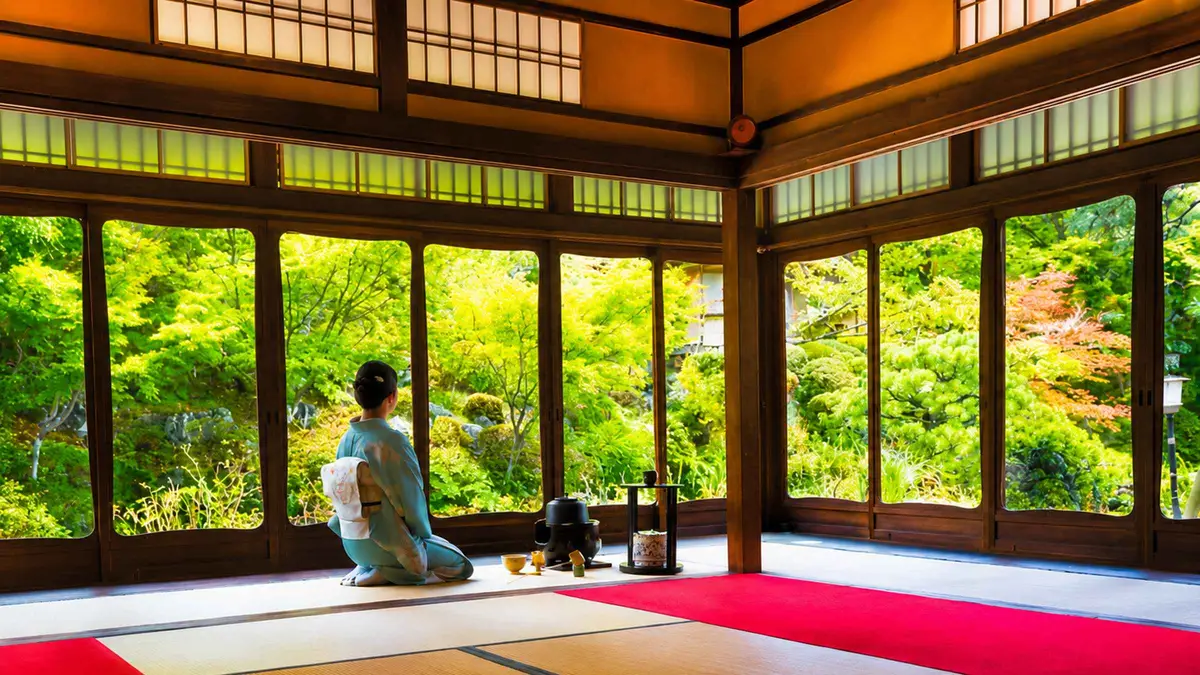
Forty-five minutes in a garden tea house minutes from Kiyomizu-dera: two bowls of Uji matcha, one made for you and one you whisk yourself, with a wagashi. Small groups, and it books out in the blossom weeks.
- Savor Japan's changing seasons in the timeless elegance of our historic garden
- Experience an authentic Japanese tea ceremony overlooking a beautiful garden
- Immerse yourself in a tranquil Zen atmosphere and the tea master's graceful art
- Enjoy a traditional Japanese sweet and matcha prepared by our tea master
 from $20.61
Kyoto: Kimono Rental with Hairstyling and Accessories
Listing details checked 2026-08-30
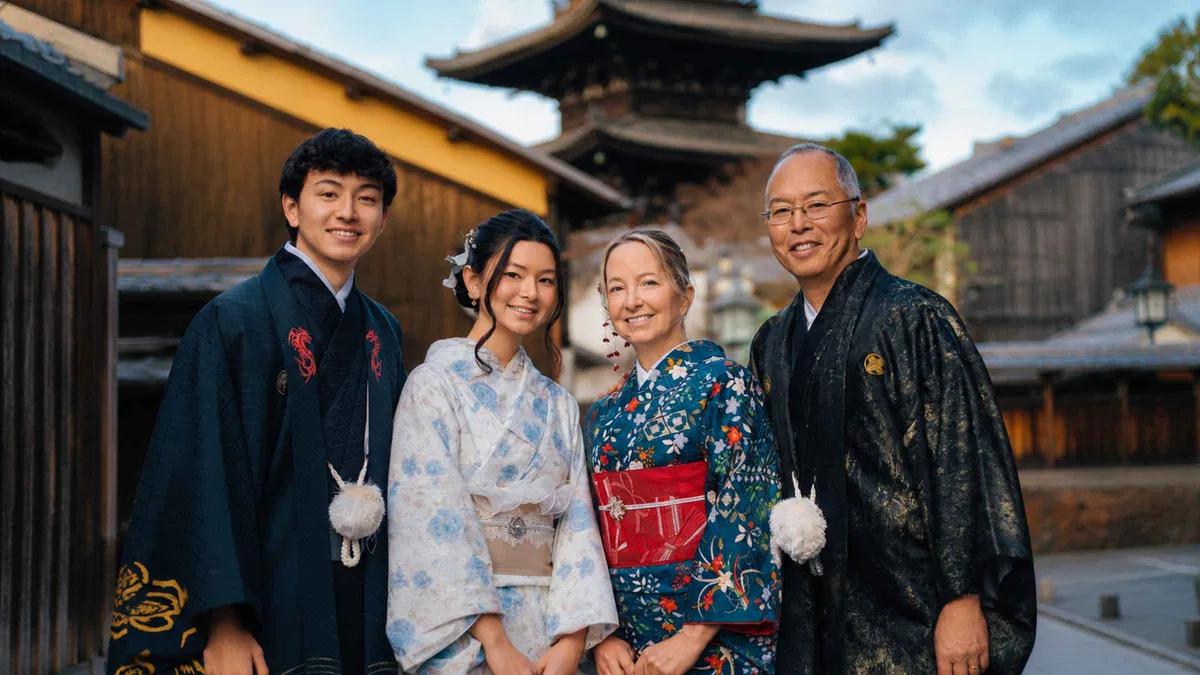
A full-day kimono rental until 17:00 with accessories and hairstyling, from a wide range of classic and modern designs. The practical version: dress at the shop, walk Higashiyama, return before closing.
- Feel like a local as you explore Kyoto in a traditional Japanese kimono
- Choose from a wide selection of kimonos, from classic to modern designs
- Get personalized assistance from the staff to help you select the perfect kimono
- Complete your look with a hairstyle and accessories to match your kimono
Sannenzaka and Ninenzaka: what makes them different
These are the two lanes on every Kyoto poster, and they are protected under national law rather than local sentiment.
Both are designated Important Preservation Districts for Groups of Traditional Buildings, which restricts what owners may do to façades, roofs, signage and even the colour of a vending machine. That is why the district reads as coherent where most of Kyoto is a patchwork of post-war concrete: nothing here can be replaced with something taller or shinier.
Sannenzaka — "three-year slope" — climbs in stone steps between two-storey wooden shops selling pickles, ceramics, incense and yatsuhashi, the cinnamon rice-flour sweet the city is known for. Ninenzaka, "two-year slope", continues it northwards on a gentler gradient. The names are usually explained as the number of years of misfortune that follow a fall on the steps, which is a folk etymology, and the steps are slippery enough in rain to make you take it seriously anyway.
What to notice: the roof tiles with their demon-faced ends, the inuyarai — the curved bamboo screens at street level that keep dogs and cart wheels off the timber — and the fact that almost every building is a working shop with a family living above it.
Ishibei-koji, the lane nobody photographs
Off Nene-no-Michi, a short stone alley curves between plastered walls with no shopfronts at all: Ishibei-koji, built in the early twentieth century as a row of rented houses and now a handful of very expensive ryotei and small inns. It takes four minutes to walk and is often completely empty. It is also private property in feel if not in law, so photograph the lane and not the doorways.
The three Higashiyamas
The same 2.5 kilometres of lane behaves as three separate places depending on when you stand in it.
Before 08:30 the shutters are down, delivery vans are working, school children are cutting through, and the lanes are yours. Kiyomizu-dera has been open since 06:00, so the sequence works: temple first, then walk down into a quarter that is still asleep.
From 10:00 to about 16:00 every shop is open, the yatsuhashi samples are out, kimono-rental groups are photographing each other on the steps, and the lanes move at a shuffle. This is the version most visitors see, and it is not the same experience.
After the shops close, between 17:00 and 18:00, the crowd drains within twenty minutes. The lanes are lit, mostly empty, and the walk down to Gion arrives exactly when the lanterns come on there. This is the best hour of the three and almost nobody uses it.
| Hour | Shops | Crowd | What it is good for |
|---|---|---|---|
| 06:00–08:30 | Closed | Almost none | Photographs, the temple, the sense of the place |
| 10:00–16:00 | All open | Heavy | Shopping, eating, the paid gardens |
| 17:00–19:00 | Closing | Thin | Walking, lit lanes, arriving in Gion at dusk |
| After 20:00 | Closed | None | Quiet, dark and residential — go through, not to |
Eating and buying in the lanes
The quarter's shops are geared to visitors, which is not automatically a criticism — several of them are very old.
The things actually made here are yatsuhashi, the cinnamon-scented rice-flour sweet sold raw and folded around bean paste or baked hard; Kiyomizu-yaki ceramics, which have been fired on this hillside for centuries and are sold in shops that can tell you which kiln each piece came from; and pickles, sold by houses with their own cellars.
The eating along the lanes runs to standing counters and tea houses rather than restaurants, which suits the walk. For an actual meal, keep going down to Gion and Pontocho, where a table before 18:00 is genuinely available, or across to Nishiki Market earlier in the day. Note that the market's rule about not eating while walking applies here in spirit too — the lanes are narrow, they are somebody's street, and the shops provide places to stand.
Higashiyama map: the walk from top to bottom
The route in order, from the temple at the top of the hill to the shrine at the bottom.
Staying in Higashiyama
Sleeping inside the preserved quarter buys you the empty morning hour, which is the one thing money cannot otherwise get you in Kyoto. It costs a premium and the trade-offs are real: few convenience stores, steep lanes with luggage, and no subway station.
Higashiyama and the Kiyomizu lanes
- Walking distance
- Inside the preserved district, 5 to 15 minutes from Kiyomizu-dera
- Typical double
- Premium — machiya inns and small hotels
- Suits
- Early risers, photographers, anyone whose trip is about the eastern chain
Steep stone lanes with a suitcase are the practical cost; most inns will arrange a taxi drop.
See stays in Higashiyama and the Kiyomizu lanesGion and Kawabata
- Walking distance
- 10 minutes from Hanamikoji, on the Keihan line
- Typical double
- Mid to premium
- Suits
- Evenings out, dinner in Pontocho, an easy train to Fushimi Inari
Flat, well served by trains, and five minutes from the district above.
See stays in Gion and KawabataRates move with the season rather than the district: the same room in April or November costs roughly double what it does in June. Kyoto's accommodation tax is charged per person per night and rises on 1 March 2026 — the bands are on the costs page. We may earn a commission if you book through these links, at no extra cost to you.
Next stop from Higashiyama
Walking times are our estimates.
Gion
The geiko district, best as the lanterns come on — which is exactly when this walk delivers you there.
At the bottom of the walkKiyomizu-dera
Opens at 06:00, which is what makes the early version of this walk possible at all.
At the topSanjusangen-do
1,001 gilded Kannon in a 120-metre hall, and ten minutes by bus from Kyoto Station.
25 minutes downhill and southHigashiyama questions
What is Higashiyama in Kyoto?
The hillside district on the eastern edge of the city between Kiyomizu-dera and Yasaka Shrine, including the preserved lanes of Sannenzaka and Ninenzaka. It is a protected conservation area of wooden machiya and stone streets — free to walk, open at any hour, and the part of Kyoto that looks the way visitors expect.
How long does the Higashiyama walk take?
About 35 minutes of pure walking over 2.5 kilometres from Kiyomizu-dera down to Gion, or 90 minutes to three hours with stops depending on how many gardens you pay for. The stop-by-stop table prices each one.
When should you walk the Higashiyama lanes?
Before 08:30 or after the shops close between 17:00 and 18:00. Between 10:00 and 16:00 the lanes move at a shuffle. The early version pairs with Kiyomizu-dera's 06:00 opening; the late version delivers you into Gion as the lanterns come on.
Is Higashiyama free?
The lanes, Ishibei-koji, Nene-no-Michi, Yasaka Shrine and Maruyama Park all cost nothing. The paid stops on the route are the temples: Kodai-ji at $5 (¥800) and Kiyomizu-dera, which does not publish its fee.
Where should you stay in Higashiyama?
Inside the preserved lanes if the empty morning hour is what you are after, or down at Gion and Kawabata for flat ground and a train line. The where-to-stay page compares all four Kyoto districts with what a midweek double actually costs.
How do you get to Higashiyama?
City bus 100 or 206 from Kyoto Station to Gojo-zaka or Kiyomizu-michi for the top of the walk, or the Keihan line to Gion-Shijo for the bottom. Walking up from Gion takes about twenty minutes; walking down from Kiyomizu-dera takes rather less. How the fares work.
Page last reviewed 2026-08-30. Prices, hours and terms are set by the venue or operator and confirmed at checkout.
We may earn a commission if you book through one of our links, at no extra cost to you. Full affiliate disclosure