 Kyoto City Guide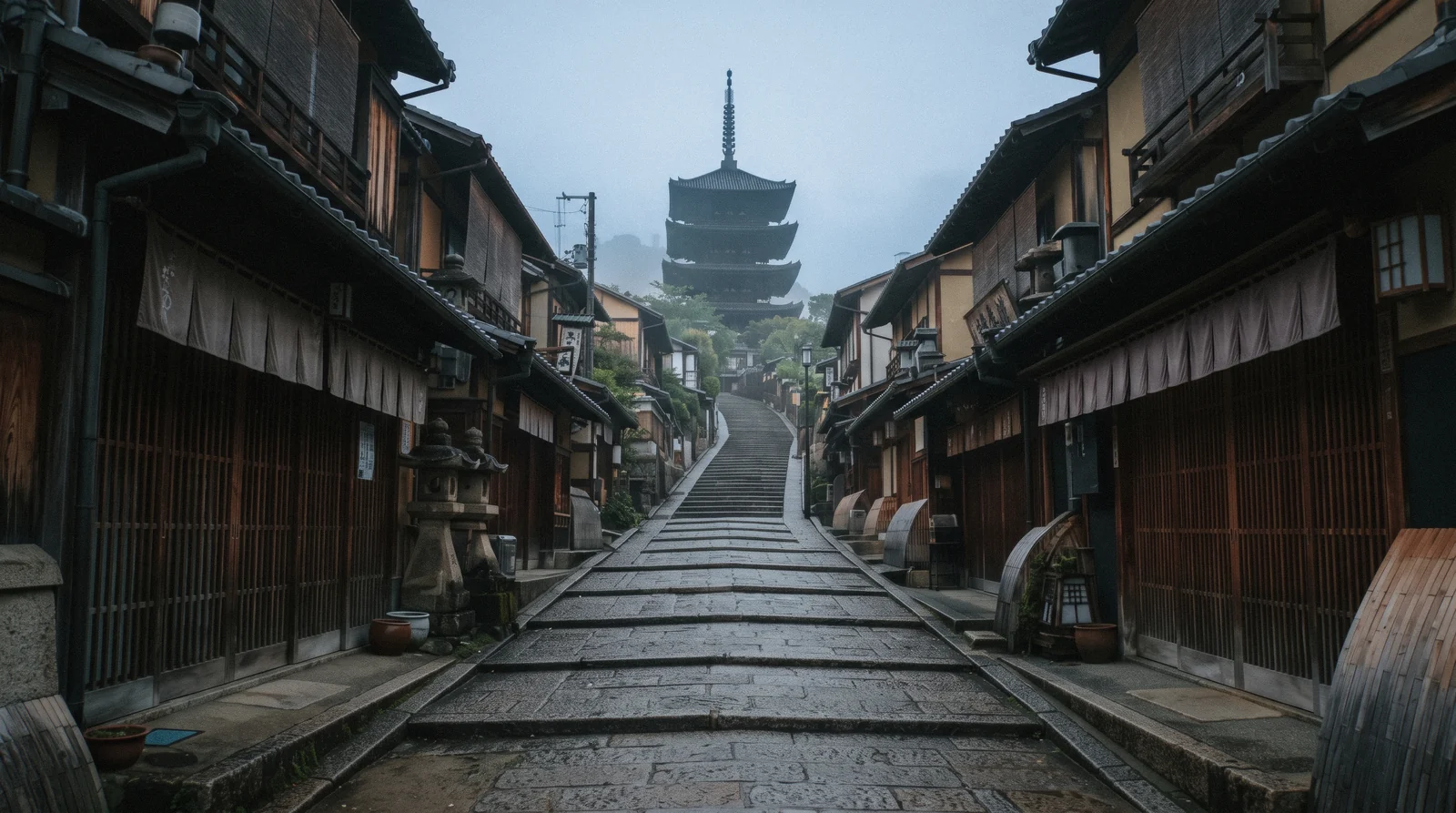
Kyoto in 1 Day
Kyoto in 1 day is genuinely possible, and it is possible because of one fact nobody else builds a plan around: Kiyomizu-dera opens at 06:00, three hours before anything comparable in Japan. Start there and the day unfolds downhill through empty lanes; start at ten and you spend it in queues. This route is one district, one train ride and about nine kilometres on foot, with the paid stops priced and the walking times measured. The longer versions are two days and three; the city as a whole is on the Kyoto city guide homepage.
Quick answer The route, the cost, the two hinge times — in four lines
Kiyomizu-dera at 06:30, the Higashiyama lanes before the shops open, Sanjusangen-do late morning, Nishiki Market for lunch, Gion in the afternoon and Fushimi Inari at golden hour. About nine kilometres on foot, roughly $12.50 (¥2,000) in admissions and fares, and no booking required at any point. Hours read from the venues' own sites on 30 August 2026.
Key takeaways
- The two fixed points are a 06:30 start at Kiyomizu-dera and reaching Fushimi Inari after about 16:30 — everything in between is flexible
- Skip the transport pass: this day uses two train rides and costs less than the $6.88 (¥1,100) day pass — the fares
- If you cannot start early, invert the day: Fushimi Inari first at 08:00, Higashiyama after the shops shut at 17:00
- One guided fixed point is worth considering — an evening Gion walk at $23.49 (¥3,758) turns the last hour into something you could not do alone
How this day is built
Three rules, and everything else follows from them.
Rule one: start where the gate opens first. Kiyomizu-dera opens at 06:00 all year, which is unique among Kyoto's major sights. Being inside it at half past six means the temple to yourself, and — more valuable still — the stone lanes below it before the shops raise their shutters at ten.
Rule two: walk downhill. From the temple the whole eastern chain descends: Sannenzaka, Ninenzaka, Nene-no-Michi, Yasaka Shrine, Gion. Four separate bus rides become one continuous walk, and the direction is the difference between a pleasant morning and a climb.
Rule three: end where the light is. Fushimi Inari never closes, and the hours either side of sunset are when the lower torii are lit, the day-trippers have gone and the mountain is quiet. Putting it last uses an hour that most itineraries waste on a bus back to the hotel.
What this day deliberately leaves out
Arashiyama and the bamboo path, Kinkaku-ji, Ryoan-ji and Nijo Castle are all on the other side of the city, and reaching any of them costs forty to fifty minutes each way. On a single day they would replace three stops with one — which is a bad trade. If the Golden Pavilion is non-negotiable, use the two-day plan instead, or accept a much thinner eastern morning.
The day, stop by stop
Walking times are ours, measured at an ordinary pace; admissions and opening hours are the venues' own, read on 30 August 2026. The whole route is about nine kilometres on foot plus two short train rides.
-
Kiyomizu-dera
Not published by the temple — bring coinsTake a taxi or the first bus up to Gojo-zaka and walk the last ten minutes uphill. At half past six the stage is nearly empty, the valley below is still in shadow and the Otowa waterfall has no queue at all.
Give it an hour. Walk out past the Koyasu pagoda for the classic view back at the stage — five minutes, and almost nobody does it.
walk about 5 min to next
-
Sannenzaka and Ninenzaka
FreeThe preserved lanes with the shutters still down. This is the version of Higashiyama that the photographs promise and the ten-o'clock crowd never sees.
Stop at Ishibei-koji, four minutes off Nene-no-Michi: one stone alley, no shops, usually empty.
walk about 12 min to next
-
Yasaka Shrine and Maruyama Park
FreeFree, open at every hour, and the natural bottom of the hill. The park behind it is where Kyoto picnics under the blossom in April and where you can sit for ten minutes in every other month.
Breakfast: the cafés along Higashi-oji open from about eight, or hold out for the market at lunch.
walk about 15 to the bus stop min to next
-
Sanjusangen-do
$3.75 (¥600)One hundred and twenty metres of hall and 1,001 gilded Kannon standing ten deep, plus twenty-eight guardian figures that are the finest sculpture in the city. Shoes off, no photography, single direction — which is why it takes a predictable forty minutes whatever the day.
Bus 100, 206 or 208 from Gion gets you here in about fifteen minutes.
walk about 10 to Shichijo station min to next
-
Nishiki Market
Free to walk; tastings $1–6 (¥150–1,000)Keihan to Gion-Shijo and across the river, or bus back over Shijo. The market is at its best between ten and half twelve, and the association asks you to eat at the shop rather than on the move — most counters have a standing space beside the till.
Pickles, yuba, tamagoyaki, a grilled skewer. Then the depachika halls under the Shijo stores if the arcade is too full.
walk about 12 min to next
-
Nijo Castle — optional, or an hour off your feet
$8.13 (¥1,300) with Ninomaru PalaceTwo subway stops from Karasuma-Oike. Ninomaru's nightingale floors and thirty-three painted rooms are the one properly indoor hour in this plan, which makes this the stop to keep if the weather turns and the stop to drop if it does not.
If you skip it, use the time for a tea ceremony instead — several run 45-minute sessions within ten minutes of here.
walk about 5 to the subway min to next
-
Gion, in daylight
FreeWalk Shirakawa first — the canal lane north of Shijo, willows and low wooden houses, and the better photograph. Then Hanamikoji south towards Kennin-ji.
The private lanes off it are posted closed by the residents' council; the public street is the one to walk.
walk about 8 to Gion-Shijo station min to next
-
Fushimi Inari at golden hour
FreeKeihan from Gion-Shijo to Fushimi-Inari, about seven minutes, then five on foot. The crowd is thinning by five, the light comes in sideways through the gates, and fifteen minutes up the path there is almost nobody.
Go as far as the Yotsutsuji junction if you have the legs — forty minutes up, the one real view of the city — or just to the end of the Senbon Torii and back. The shrine has no closing time, so the only thing deciding your turnaround is the light.
walk — min to next
-
Dinner in Pontocho
$18.75–37.50 (¥3,000–6,000)Back on the Keihan to Gion-Shijo and across to the alley. Pontocho is two metres wide and lined end to end with restaurants at every price; before eight a table without a reservation is genuinely possible.
If you would rather not gamble on a first evening, a food tour of Gion and Pontocho covers thirteen dishes across two venues with a guide.
What the day costs
Every figure from the venues' and operators' own pages, read on 30 August 2026 and converted at ¥160 = $1. Food is the variable; the sightseeing is not.
| Item | Cost | Note |
|---|---|---|
| Kiyomizu-dera | Not published | Bring a few hundred yen in coins |
| Sanjusangen-do | $3.75 (¥600) | The only certain admission of the morning |
| Nijo Castle with Ninomaru — optional | $8.13 (¥1,300) | Drop it in good weather |
| Higashiyama, Gion, Fushimi Inari, Nishiki | Free | Four of the day's seven stops |
| Trains and buses | About $5 (¥800) | Two Keihan hops, one bus, one subway pair |
| Sightseeing total, with the castle | About $17 (¥2,700) | About $9 (¥1,400) without it |
| Lunch at the market | $7.50 (¥1,200) | Tastings, or a depachika bento |
| Dinner in Pontocho | $18.75–37.50 (¥3,000–6,000) | Before drinks |
The $6.88 (¥1,100) day pass does not pay on this route: the walking replaces the buses, and the two Keihan rides are not covered by it anyway. When it does pay.
If you cannot start at half past six
Invert the day rather than compressing it — the same stops in the opposite order still work.
The late-start version runs south to north. Begin at Fushimi Inari at 08:00, which is quiet enough for the first hour; walk as far as Yotsutsuji, come down by ten. Sanjusangen-do at eleven, Nishiki Market at half twelve, then a slow afternoon downtown — Nijo Castle, a tea ceremony, the department-store food halls.
Then climb to Kiyomizu-dera at about 16:00, walk down through the lanes as the shops close between five and six, and arrive in Gion at dusk with the lanterns coming on. You lose the empty temple and gain the lit lanes, which is a fair trade and considerably better than doing the same route at eleven in the morning.
| Early version | Late version | |
|---|---|---|
| Kiyomizu-dera | 06:30, empty | 16:00, busy but golden |
| Higashiyama lanes | 07:45, shutters down | 17:00, shops closing, crowd draining |
| Fushimi Inari | 16:45, golden hour | 08:00, quiet |
| Gion | 15:30, daylight | 18:30, lanterns |
| Verdict | Best for photographs and quiet | Best if you are not a morning person |
The guided versions of this day
If one day is all you have and you would rather not navigate it, these cover most of the same ground with tickets included. Prices are the platform's listings in USD, read on 30 August 2026.
 from $63.75
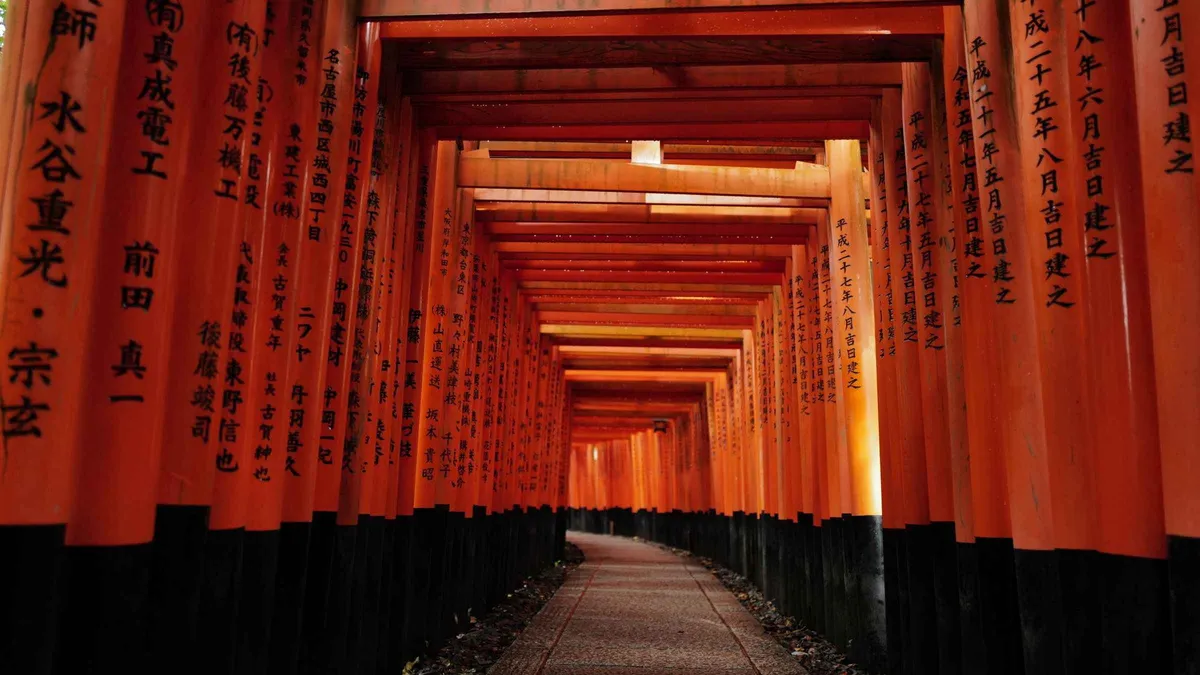
Kyoto: Early Morning Tour of Fushimi Inari, Arashiyama and Kinkakuji
Listing details checked 2026-08-30
Starts before the crowds: Fushimi Inari, Arashiyama's bamboo and Kinkaku-ji in six hours with an English-speaking guide and lunch. The early slot is the whole point — these three are unrecognisable after 10:00.
- Marvel at the best of Kyoto's famous, most-visited sights on this guided tour
- Immerse yourself in all the city has to offer before the crowds get there
- Make the most of your time with an early start and be finished by lunch
- Pause for a moment of contemplation and reflection at the Fushimi-Inari Shrine
 from $94.95
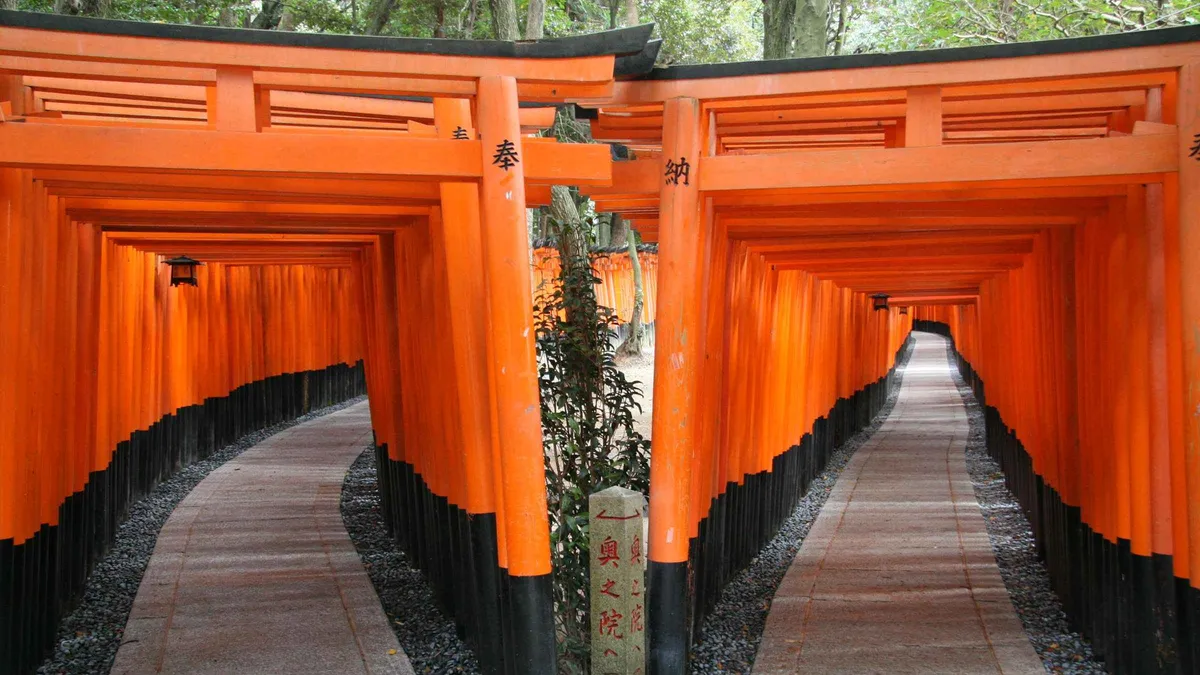
Kyoto: Fushimi Inari, Kinkakuji, Bamboo Grove 1-Day Bus Tour
Listing details checked 2026-08-30
The all-in coach day: Kiyomizu-dera, Sanjusangen-do, Tenryu-ji, the bamboo grove, Kinkaku-ji and Fushimi Inari with entry tickets and a Japanese buffet in one 8.5-hour run. The most reviewed Kyoto tour on the platform.
- Visit Fushimi Inari Taisha and walk through its iconic thousand torii gates
- Stroll through Arashiyama’s famous bamboo forest and enjoy its peaceful scenery
- Discover Kiyomizu-dera and the Golden Pavilion, in one unforgettable journey
- Benefit from a professional English-speaking local guide
 from $52.47
Kyoto: Kiyomizu-dera UNESCO Guided Tour
Listing details checked 2026-08-30
Ninety minutes inside Kiyomizu-dera with admission included and a choice of an early-morning or afternoon departure. The morning slot exists because the temple opens at 06:00.
- Explore Kiyomizu-dera, a UNESCO World Heritage Site
- See the famous wooden stage built entirely without nails
- Enjoy panoramic views over Kyoto from the main hall
- Choose early morning or afternoon departure options
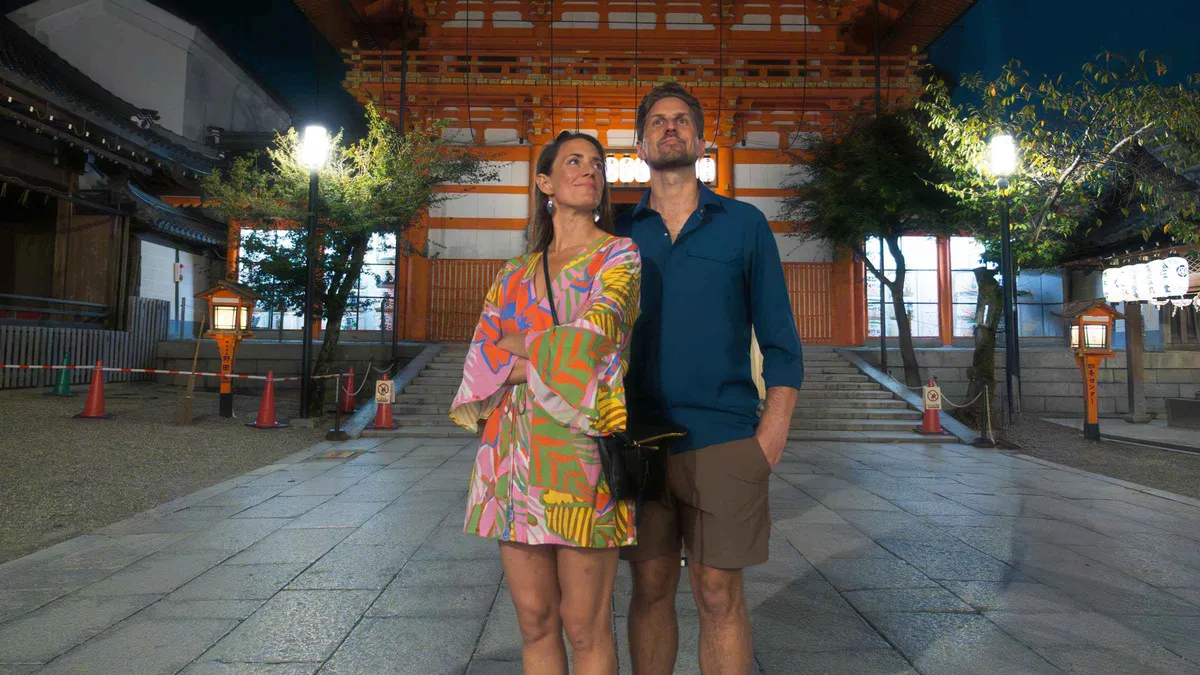 from $23.49
Kyoto: Gion Geisha District Night Walking Tour
Listing details checked 2026-08-30
Gion and Higashiyama after dark with a bilingual guide, ending with a digital list of the guide's own recommendations. Two hours, and it covers more ground than the Gion-only walks.
- Explore Kyoto’s historic Gion district at night
- Small-group experience limited to 8 guests
- Learn authentic insights into geiko and maiko culture
- Receive a digital Kyoto guide with local recommendations
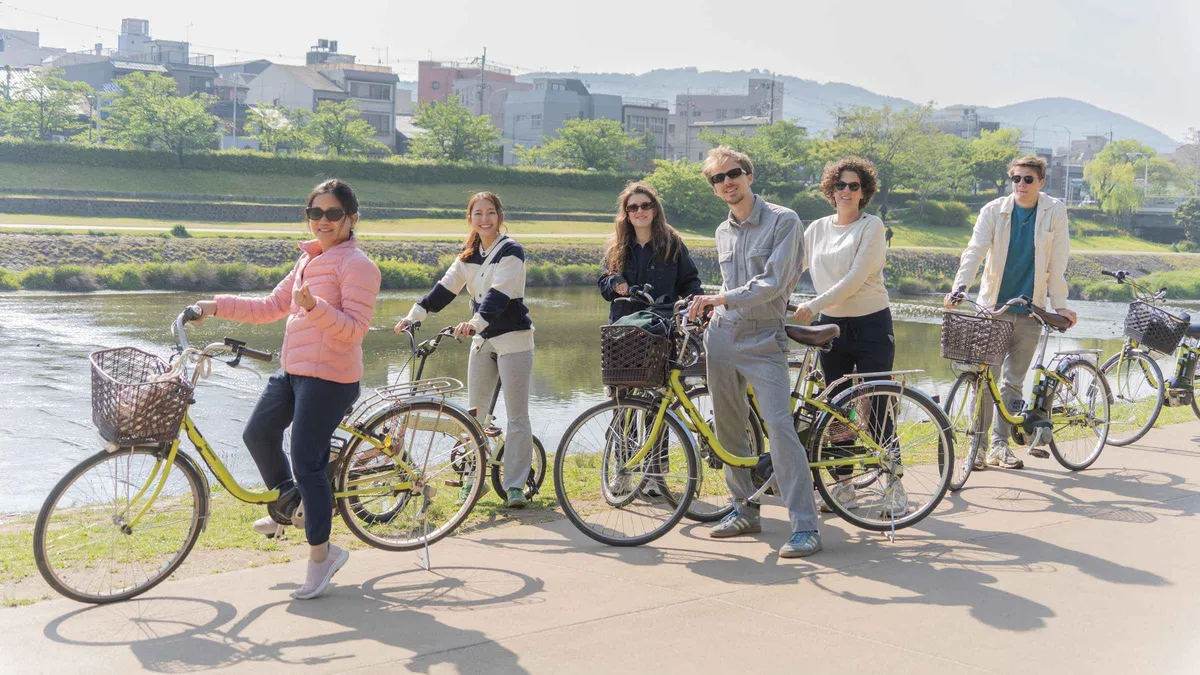 from $55
Kyoto: Morning Highlights E-Bike Tour
Listing details checked 2026-08-30
Two and a half morning hours by e-bike across Kiyomizu-dera, Gion and Fushimi Inari, entry tickets included. Covers ground on the hills that would cost you an hour on foot.
- Discover Kyoto's must-see sights without the crowds
- Enjoy a small-group experience for a personal touch
- Learn local history and cultural insights from a Japanese guide
- Cycle around Kyoto's highlights
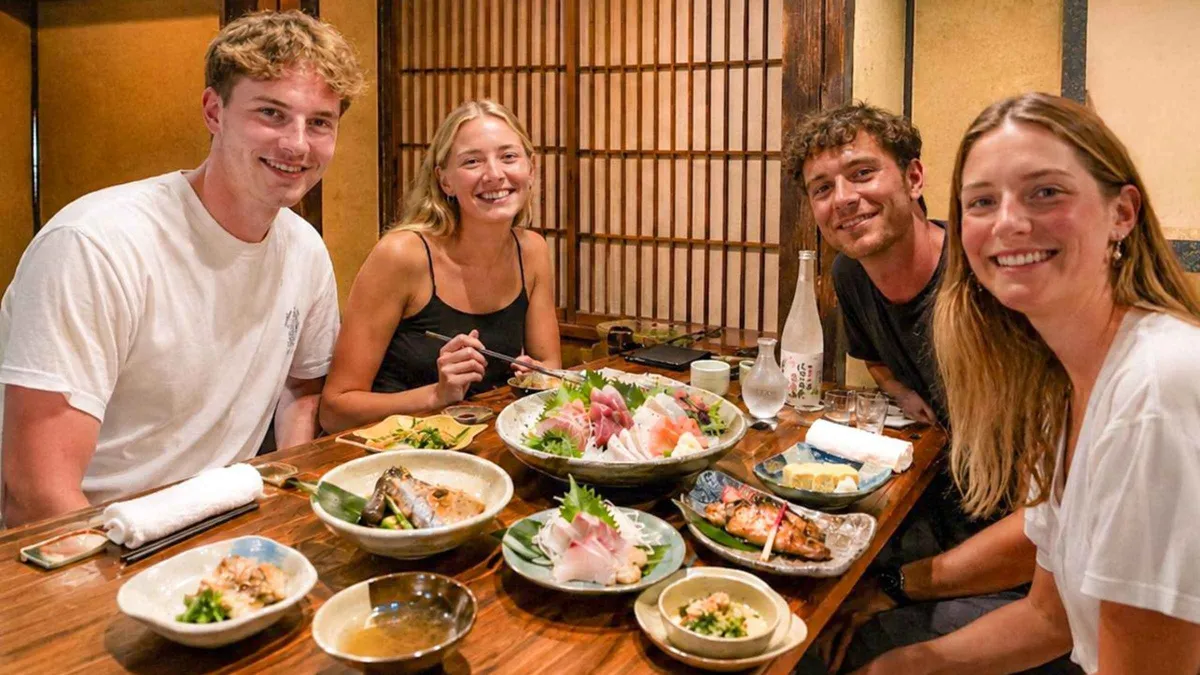 from $69.96
Kyoto: Gion & Pontocho Food Tour with 13 Dishes
Listing details checked 2026-08-30
Thirteen dishes across a restaurant and an izakaya in Gion and Pontocho, with two drinks and a local guide. Three hours, small group, and it solves the first evening's no-reservation problem.
- Explore Kyoto’s hidden streets and local flavors
- Enjoy up to 13 traditional Japanese dishes, ranging from tempura to sashimi
- Immerse yourself in Kyoto's rich culture, culinary history, and traditions
- Connect with fellow travelers in a small-group setting
The one-day route, mapped
Seven stops in order, all on the eastern side of the city except the market and the optional castle.
If you have longer
The two-day and three-day versions of the same city.
Kyoto in two days
Adds the western side: the bamboo at 07:30, Tenryu-ji at opening and the river, then Kinkaku-ji on the way back.
Day twoKyoto in three days
Adds the north-west pavilions and one day trip — Nara or Uji — without wrecking the other two days.
Day threeDay trips from Kyoto
Ten options ranked by how long they really take, and which need a coach rather than a train.
Outside the cityOne day in Kyoto: the questions
Is one day enough for Kyoto?
Enough for one side of it. This route covers the eastern chain, the market and Fushimi Inari properly, and leaves out Arashiyama, Kinkaku-ji and the north-west entirely — those are forty to fifty minutes away and would replace three stops with one. If you want the Golden Pavilion too, use the two-day plan.
What should you not miss in one day in Kyoto?
Kiyomizu-dera at 06:30 and Fushimi Inari at golden hour — the two ends of this route, and both are decided by the hour rather than the ticket. Everything between them is negotiable.
How much walking is in a one-day Kyoto itinerary?
About nine kilometres on this route, most of it downhill or flat, plus two short train rides and one bus. The steepest part is the ten minutes up to Kiyomizu-dera at the start, which is why a taxi to Gojo-zaka is money well spent at six in the morning.
Do you need a bus pass for one day in Kyoto?
No. This day uses two Keihan rides, one bus and one subway pair — about $5 (¥800) in total, against $6.88 (¥1,100) for the pass, which does not cover Keihan anyway. When the passes do pay.
Can you fit both sides of the city into one day?
Only by gutting both. The Golden Pavilion and the eastern shrine sit at opposite corners of Kyoto and the connection between them runs about an hour each way, so doing both means dropping the preserved lanes — the part of the city this route exists to protect. The two-day version gives each side its own morning.
What time should you start a one-day Kyoto itinerary?
06:30 at Kiyomizu-dera. That is not enthusiasm for its own sake: the temple opens at 06:00 and the preserved lanes below it are empty until about 08:30, which is the single biggest difference available between a good Kyoto day and an average one. The late-start version is the alternative.
Page last reviewed 2026-08-30. Prices, hours and terms are set by the venue or operator and confirmed at checkout.
We may earn a commission if you book through one of our links, at no extra cost to you. Full affiliate disclosure