 Kyoto City Guide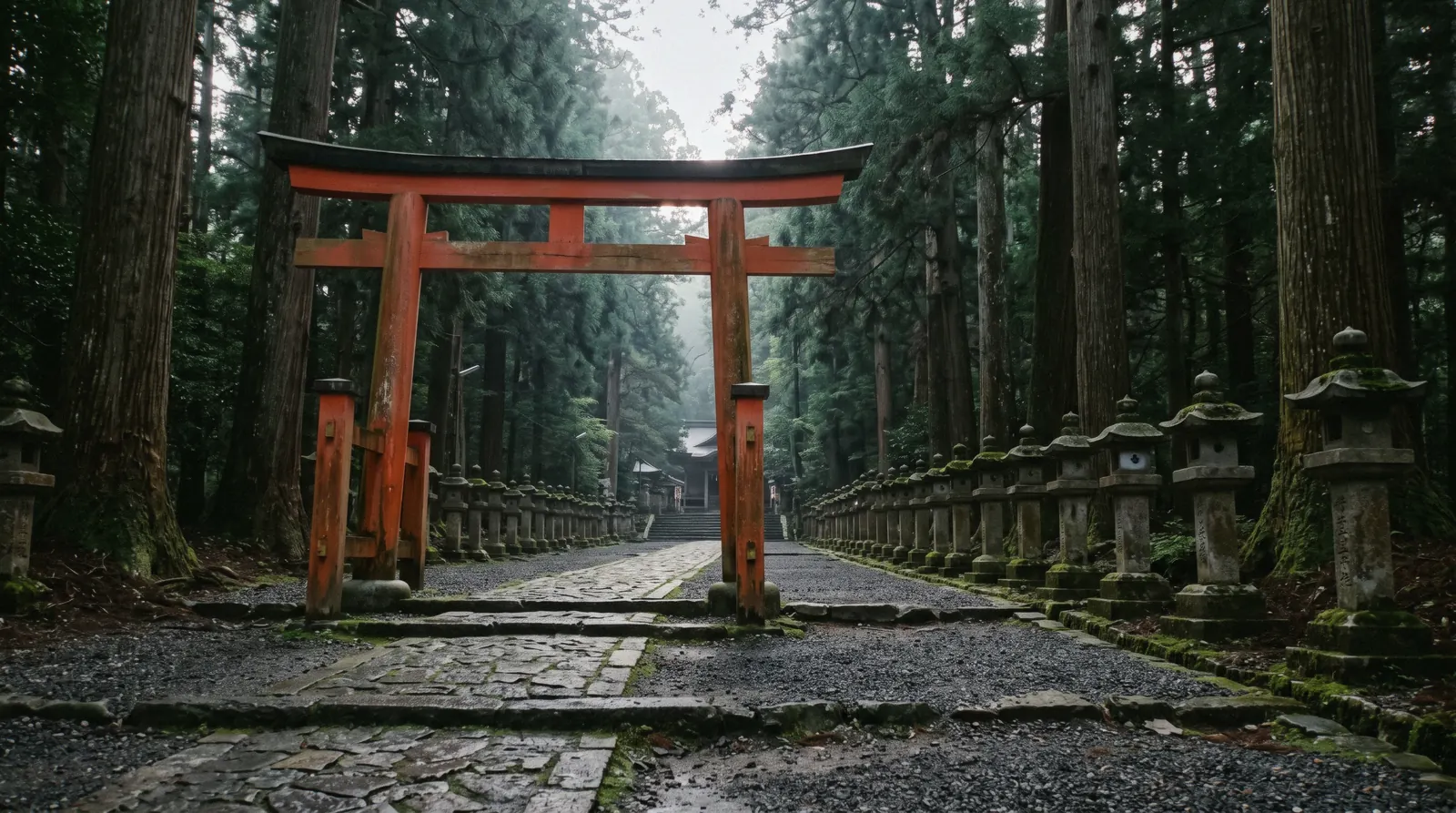
Kyoto Shrines
Kyoto shrines are the free half of the city and the half that never closes. Where the temples charge a few hundred yen and shut at five, the shrines have no gate, no ticket and — at the big ones — no closing time at all, which makes them the answer to a six in the morning and a nine at night. This page covers which ones matter, what actually happens at them, and the etiquette that takes thirty seconds to learn. The temples are on their own page, the full sight list on things to do, and the city on the Kyoto city guide homepage.
Quick answer Free, always open, and what to do at the gate — in four lines
Kyoto's roughly four hundred Shinto shrines charge nothing to enter. Fushimi Inari is open at every hour of the day and night; Yasaka Shrine in Gion and most others are open from dawn, with amulet and prayer offices keeping daytime hours. What you pay for, if anything, is a fortune slip or an amulet.
Key takeaways
- The shrines are what you do at 06:30 and 21:00, when every temple in the city is shut — this is the practical reason they matter to an itinerary
- Fushimi Inari is the one everybody comes for; Yasaka, Heian, Kitano Tenmangu and the two Kamo shrines are the rest of the short list
- Etiquette takes half a minute to learn and matters: bow at the torii, wash at the basin, two bows, two claps, one bow at the hall
- A torii means a shrine and a large wooden gate means a temple — that is the whole distinction most visitors need
The shrines worth your time
All free to enter. Hours are the shrines' own where published; walking times and the time-needed column are ours, read and measured on 30 August 2026.
| Shrine | What it is | Open | Time | Where |
|---|---|---|---|---|
| Fushimi Inari Taisha | Ten thousand torii up a 233-metre mountain | Every hour, all year | 1–3 h | South, JR Inari |
| Yasaka Shrine | The Gion shrine; lanterns, and the Gion Matsuri's home | Every hour | 20–30 min | Gion |
| Heian Jingu | An 1895 replica of the Heian palace at 5/8 scale; garden charged | Dawn to dusk | 45 min | East, near Nanzen-ji |
| Kitano Tenmangu | The scholarship shrine; plum blossom, and a market on the 25th | Dawn to dusk | 45 min | North-west |
| Shimogamo Jinja | One of the city's two oldest shrines, in a primeval wood | Dawn to dusk | 45 min | North, Demachiyanagi |
| Kamigamo Jinja | Its northern twin, with two cones of raked sand | Dawn to dusk | 45 min | Far north |
| Kifune Jinja | Water deity, lantern staircase, in the mountains | Dawn to dusk | Half a day with the walk | North, Eizan line |
| Yasui Konpira-gu | The stone people crawl through to cut bad relationships | Every hour | 15 min | Gion |
The pattern that matters for planning: shrines have no closing time to work around, which makes them the flexible pieces in a day that is otherwise governed by temple hours. The itineraries use them at both ends of the day for exactly that reason.
What to do at the gate, in thirty seconds
Nobody will correct you and everybody notices. The sequence is short.
At the torii, pause and bow once before walking through. Keep to the side of the path rather than the middle, which is left clear for the deity.
At the temizuya, the water basin: take the ladle in your right hand, rinse your left; swap hands, rinse your right; pour a little into your cupped left hand and rinse your mouth, discreetly, spitting beside the basin rather than into it; then stand the ladle upright to rinse the handle. Never drink from the ladle.
At the hall: toss a coin into the box — a five-yen piece is traditional, because go-en also means "connection" — ring the bell if there is one, then bow twice, clap twice, hold your hands together for a moment, and bow once more. Two bows, two claps, one bow.
That is the whole ritual. The exception worth knowing is Izumo-style shrines, which use four claps; nothing in Kyoto requires it.
- Photographs are usually fine in the grounds and usually not inside the halls — look for the signs
- Fushimi Inari publishes a long list of its own prohibitions, including eating on the paths and blocking them for photographs
- Ema, the wooden plaques, and omikuji fortune slips cost a few hundred yen and are the normal way to leave something behind
- A bad fortune is tied to the rack provided rather than taken home
What a shrine actually is
The difference from a temple is not decorative, and it changes what you are looking at.
Shinto has no founder, no scripture and no doctrine of an afterlife. A shrine houses a kami — a deity, a force, sometimes a mountain or a river itself — and exists to keep the relationship between that kami and the community in good order. That is why shrines are free: you are not buying access to a collection, you are visiting a neighbour.
The architecture follows from it. The torii marks the boundary between ordinary and sacred ground. The honden, the main sanctuary, usually cannot be entered and often cannot be seen; you pray at the haiden in front of it. The shimenawa, the twisted rice-straw rope, marks something sacred, and the paper zigzags hanging from it are shide.
Most Kyoto shrines are also older than most Kyoto temples. Shimogamo and Kamigamo predate the city itself — they were here when the capital moved in 794, and the city was laid out with them in mind.
Ten thousand torii, and who paid for them
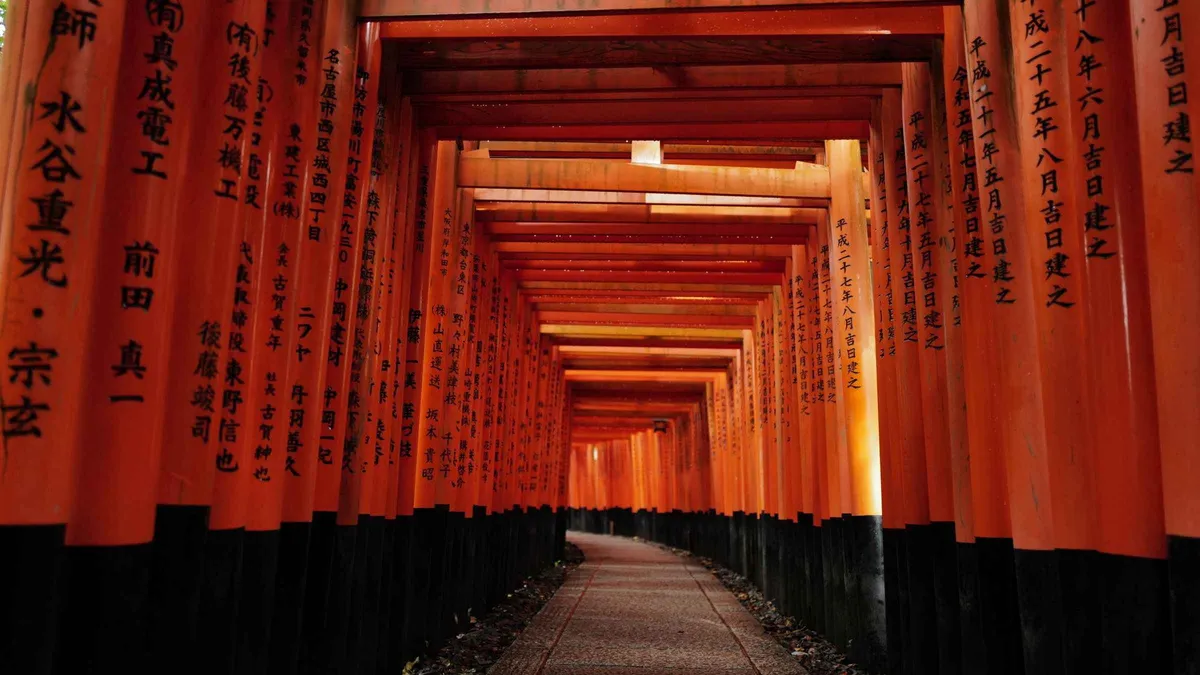
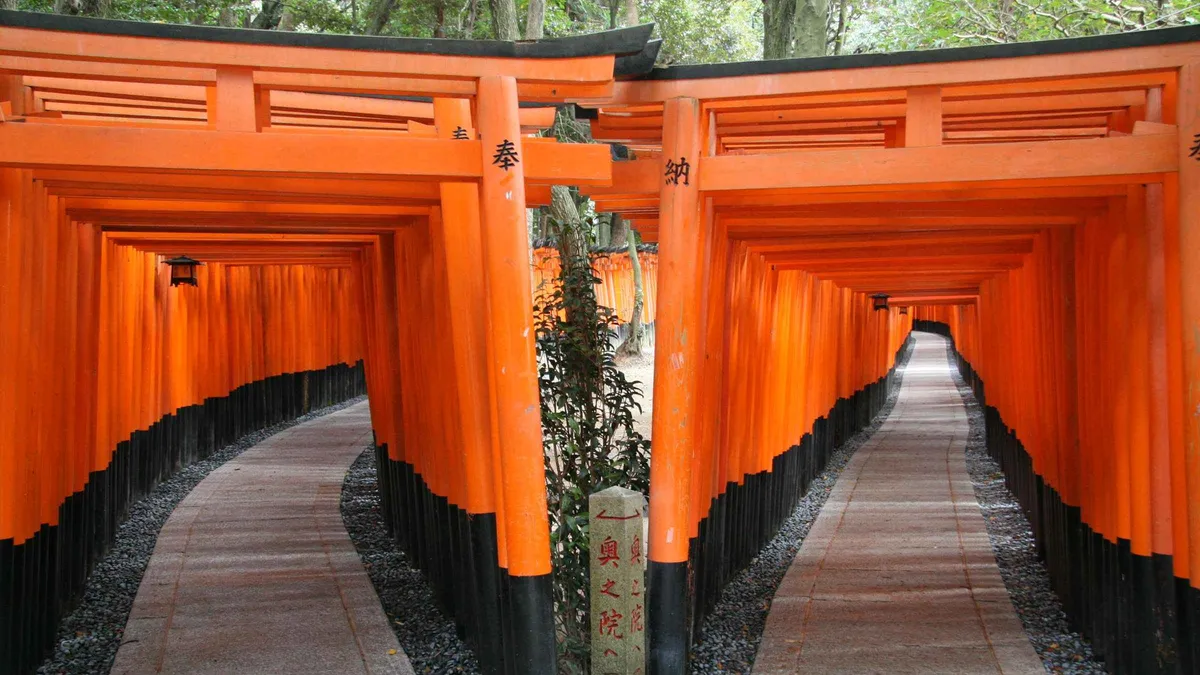
At Fushimi Inari each gate is a donation with the donor's name and date painted on the back, which you read on the way down rather than the way up. Inari is the kami of rice and, by extension, of business, so the names are companies — a subscription running since 711 that funds the constant replacement of gates rotting in a wet climate. It is the clearest illustration in Kyoto of how a shrine is actually financed.
Guided shrine visits
Shrines cost nothing, so what a guide sells here is the explanation and the hour. Prices are the platform's listings in USD, read on 30 August 2026.
 from $32.48
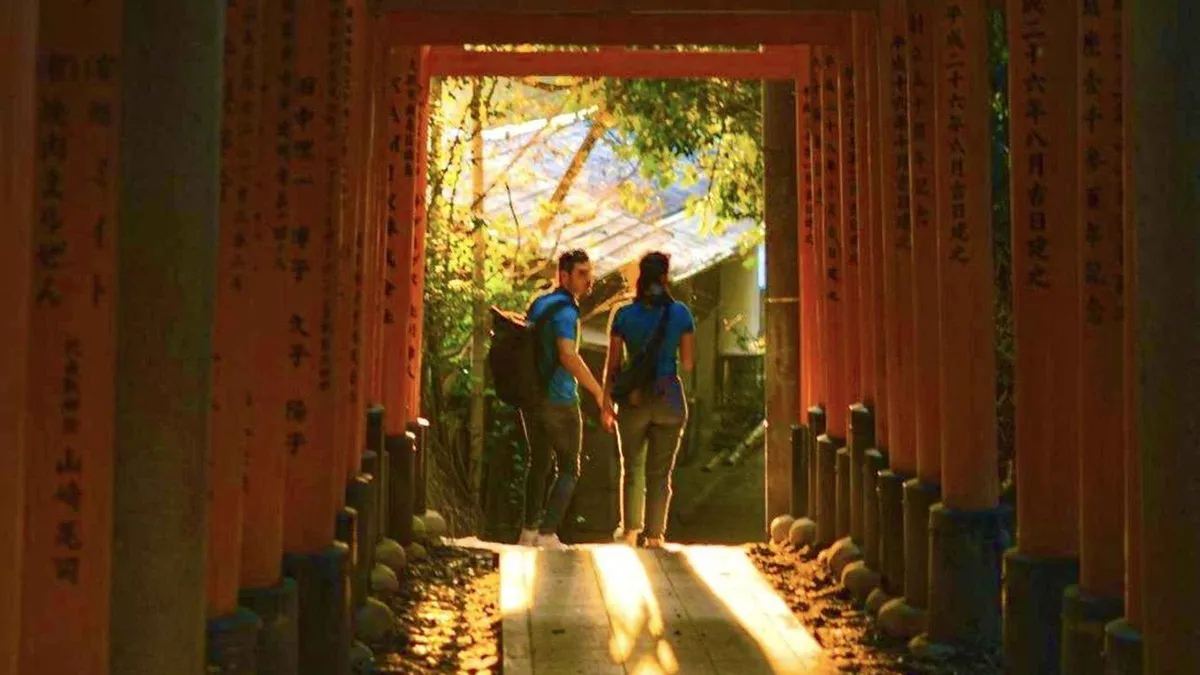
Kyoto Fushimi-Inari Night Walking Tour
Listing details checked 2026-08-30
Fushimi Inari after dark, when the torii are lit and the shrine is nearly empty. Two hours with an English-speaking guide, and the roughly ¥300 of train fare is included.
- Explore Fushimi Inari Shrine and its thousands of red gates
- Avoid the heat and the crowds
- Experience a different landscape near sunset
- Learn about the history and culture with our local English-speaking guide
 from $63.75
Kyoto: Early Morning Tour of Fushimi Inari, Arashiyama and Kinkakuji
Listing details checked 2026-08-30
Starts before the crowds: Fushimi Inari, Arashiyama's bamboo and Kinkaku-ji in six hours with an English-speaking guide and lunch. The early slot is the whole point — these three are unrecognisable after 10:00.
- Marvel at the best of Kyoto's famous, most-visited sights on this guided tour
- Immerse yourself in all the city has to offer before the crowds get there
- Make the most of your time with an early start and be finished by lunch
- Pause for a moment of contemplation and reflection at the Fushimi-Inari Shrine
 from $55
Kyoto: Morning Highlights E-Bike Tour
Listing details checked 2026-08-30
Two and a half morning hours by e-bike across Kiyomizu-dera, Gion and Fushimi Inari, entry tickets included. Covers ground on the hills that would cost you an hour on foot.
- Discover Kyoto's must-see sights without the crowds
- Enjoy a small-group experience for a personal touch
- Learn local history and cultural insights from a Japanese guide
- Cycle around Kyoto's highlights
 from $50.75
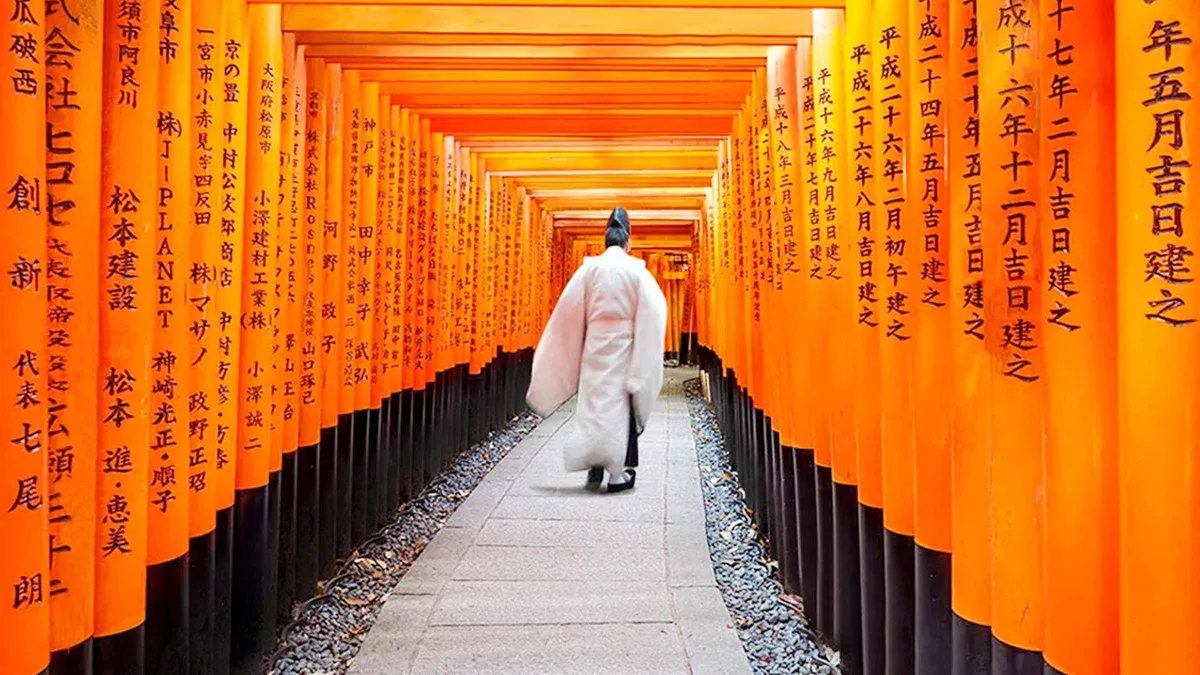
Kyoto/Osaka: Nara, Fushimi Inari Taisha, Arashiyama Bus Tour
Listing details checked 2026-08-30
The classic combination day: Nara's deer and Todai-ji, Fushimi Inari's Senbon Torii and the Arashiyama bamboo, on an air-conditioned coach with an English and Chinese guide.
- Feed, pet, and play with cute deer, the divine messengers at Nara Park
- Step into vibrant vermillion torii gates and feel the mysterious atmosphere
- Seek flourishing careers and endless prosperity at Fushimi Inari Taisha
- Wander the serene bamboo forest, where towering stalks whisper with Zen calm
 from $94.95
Kyoto: Fushimi Inari, Kinkakuji, Bamboo Grove 1-Day Bus Tour
Listing details checked 2026-08-30
The all-in coach day: Kiyomizu-dera, Sanjusangen-do, Tenryu-ji, the bamboo grove, Kinkaku-ji and Fushimi Inari with entry tickets and a Japanese buffet in one 8.5-hour run. The most reviewed Kyoto tour on the platform.
- Visit Fushimi Inari Taisha and walk through its iconic thousand torii gates
- Stroll through Arashiyama’s famous bamboo forest and enjoy its peaceful scenery
- Discover Kiyomizu-dera and the Golden Pavilion, in one unforgettable journey
- Benefit from a professional English-speaking local guide
Kyoto's main shrines, mapped
The eight worth planning around, from the mountain in the south to the two ancient ones in the north.
Where to go next
Three pages that use the shrines.
Fushimi Inari
Free, never closes, and the only major sight in the city you can visit at three in the morning.
The big oneKyoto temples
The ten temples worth your time, priced from each one's own ticket office.
The other halfKyoto in one day
A day built around a 06:00 temple and a shrine at golden hour, because those are the hours that matter.
The routeKyoto shrines: the questions
Are Kyoto shrines free?
Yes. Shinto shrines charge nothing to enter, including Fushimi Inari, Yasaka, Kitano Tenmangu and the two Kamo shrines. What costs money is optional: an amulet, a fortune slip, or an inner precinct such as the charged garden at Heian Jingu.
What is the difference between a shrine and a temple in Kyoto?
Shrines are Shinto and temples are Buddhist. In practice a torii gate means a shrine and a large wooden gate with guardian figures means a temple; shrines are free and usually open at all hours, temples charge and keep daytime hours. The temples page covers the other half.
How do you pray at a Japanese shrine?
Bow at the torii, wash your hands and mouth at the basin, then at the hall: coin in the box, ring the bell, two bows, two claps, a pause, one bow. That is the whole thing, and it takes thirty seconds. The full sequence is above.
Which shrine in Kyoto has the orange gates?
Fushimi Inari Taisha, in the south of the city — around ten thousand vermilion torii climbing Mount Inari, each one a donation with the donor's name painted on the back. It is free, never closes, and is a 5-minute train ride from Kyoto Station.
What time do Kyoto shrines open?
Most have no gate to close and are open from dawn until late; Fushimi Inari is open at every hour of the day and night. What keeps daytime hours — typically 09:00 to 16:30 — is the office that sells amulets and writes goshuin stamps.
Can you take photos at Kyoto shrines?
In the grounds, generally yes; inside the halls, generally no. Individual shrines post their own rules, and Fushimi Inari's list is unusually detailed — no photography that blocks a narrow path, no drones, no wedding-dress shoots and no eating outside the rest areas.
Page last reviewed 2026-08-30. Prices, hours and terms are set by the venue or operator and confirmed at checkout.
We may earn a commission if you book through one of our links, at no extra cost to you. Full affiliate disclosure