 Kyoto City Guide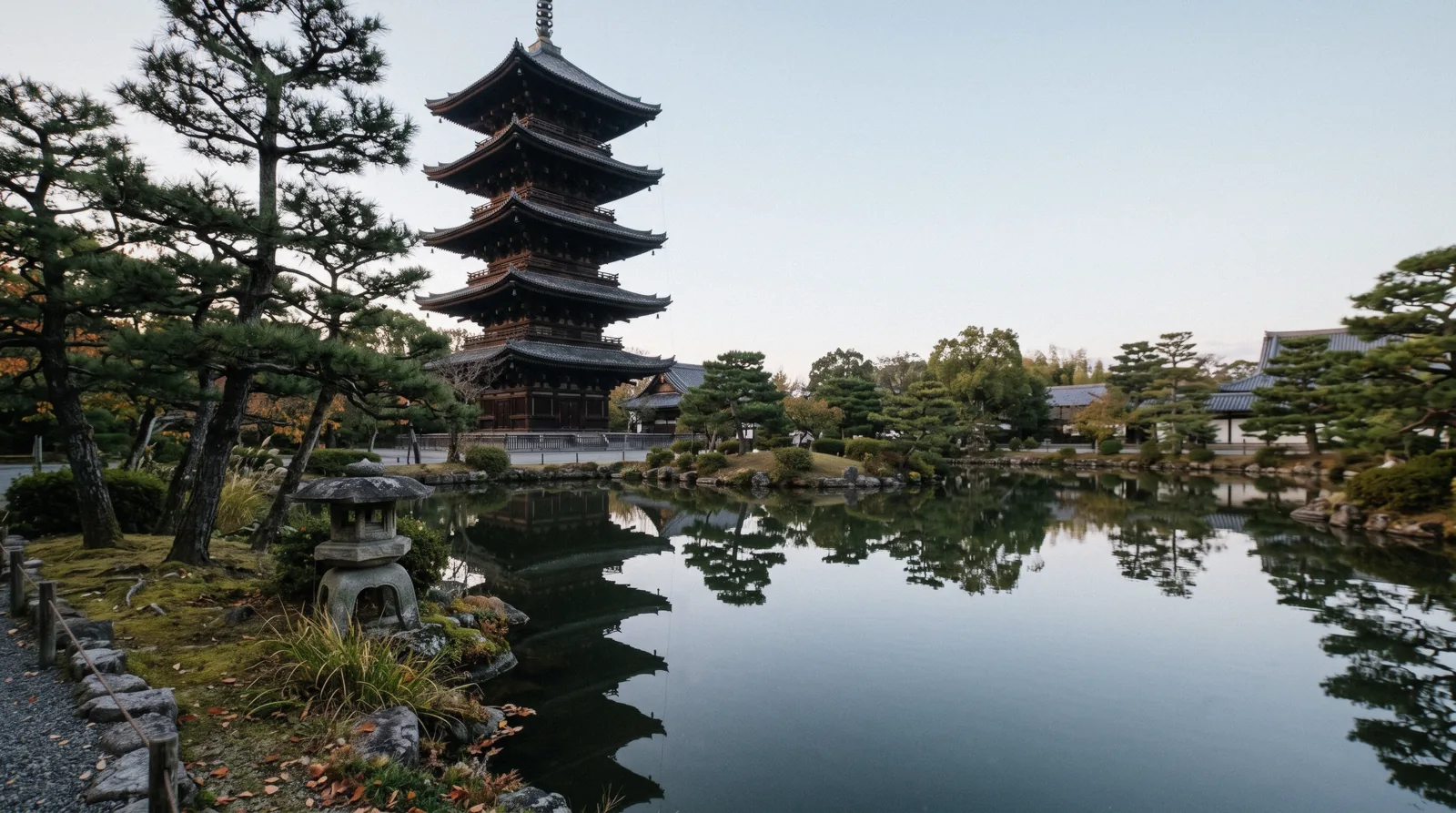
To-ji
To-ji is the temple Kukai was given in 823, five minutes from Kyoto Station, and its five-storey pagoda at 55 metres is the tallest wooden tower in Japan. The halls hold a three-dimensional mandala of twenty-one Heian-period statues that most visitors have never heard of, the grounds are free to walk, and on the twenty-first of every month the whole compound becomes a flea market. This page has the tickets, the 2026 special-opening calendar and what costs nothing. The rest of the city is on the Kyoto city guide homepage.
Quick answer $5 for the halls, free grounds, pagoda by season — in four lines
To-ji charges $5 (¥800) for the Kondo and Kodo halls, $3.75 (¥600) for Kanchi-in and $7.50 (¥1,200) for the combined ticket; the Miedo and Jikido halls and the grounds are free. Gates open at 05:00 and close at 17:00, with hall reception ending at 16:30. Read on the temple's own site on 30 August 2026, where the fee was last revised on 20 March 2025.
Key takeaways
- The interior of the pagoda opens only in fixed windows — in 2026 those are 1 January to 18 March, 25 April to 25 May, 31 October to 25 November and 26 November to 13 December (the full calendar)
- The Kodo's twenty-one statues form a three-dimensional mandala arranged by Kukai himself; it is the single best room of Heian sculpture in Japan and almost nobody queues for it
- On the 21st of every month the Kobo-ichi flea market fills the grounds — antiques, tools, food, and the grounds free to walk
- Fifteen minutes on foot from Kyoto Station, which makes it the best thing to do with a spare morning before a train
Key facts
Opening hours
| Grounds, daily | 05:00–17:00 |
|---|---|
| Kondo and Kodo halls | 08:00–17:00 |
| Kanchi-in and the treasure hall | 09:00–17:00 |
Closed Not stated — the grounds open daily; the treasure hall opens only during exhibition periods
Admission
- Adult
- $5 (¥800) Kondo and Kodo; $3.75 (¥600) Kanchi-in; $7.50 (¥1,200) combined
- Reduced
- $2.50 (¥400) high school and $1.88 (¥300) junior high and under for the halls; $3.13 (¥500) combined for high school
- Free
- The Miedo (Daishido) and Jikido halls and the wider grounds
Planning it
- Time needed
- Not stated by the temple; our routing: 45 minutes for the halls, 90 on a market day
- Book ahead
- Optional — walk-up usually fine
- Address
- 1 Kujo-cho, Minami-ku, Kyoto 601-8473 (about 15 minutes on foot from Kyoto Station)
Four tickets and a large amount of free ground. Prices are the temple's own, read on 30 August 2026 and shown in dollars with the official yen figure in brackets at ¥160 = $1; the fee schedule was revised on 20 March 2025.
| Option | Price | What it covers | Cancel | Book |
|---|---|---|---|---|
| Grounds, Miedo and Jikido halls | Free | The precinct, the Daishido where Kukai lived, and the Jikido | Not applicable | Official site |
| Kondo and Kodo halls | $5 (¥800); $2.50 (¥400) high school | The main hall and the twenty-one-statue mandala; reception to 16:30 | Not applicable | Official site |
| Kanchi-in | $3.75 (¥600); $1.88 (¥300) high school | The sub-temple with the Miyamoto Musashi paintings; from 09:00 | Not applicable | Official site |
| Combined ticket | $7.50 (¥1,200); $3.13 (¥500) high school | Halls plus Kanchi-in; reception closes 16:00, or 15:30 with the treasure hall | Not applicable | Official site |
| Private licensed guide, 4 to 8 hours | From $206.14 (¥32,982) | A route built around what you want; the temple is a natural first stop from the station | Free up to 24 hours before | Check Availability |
Group rates apply from 30 people and never to the combined ticket. Special openings — the pagoda interior, the treasure hall, the night illuminations — carry their own prices that change with the season, which is why the calendar below matters more here than the ticket table.
Guided options near To-ji
Almost no packaged tour stops here, which says more about coach routing than about the temple. Prices are the platform's listings in USD, read on 30 August 2026.
 from $206.14
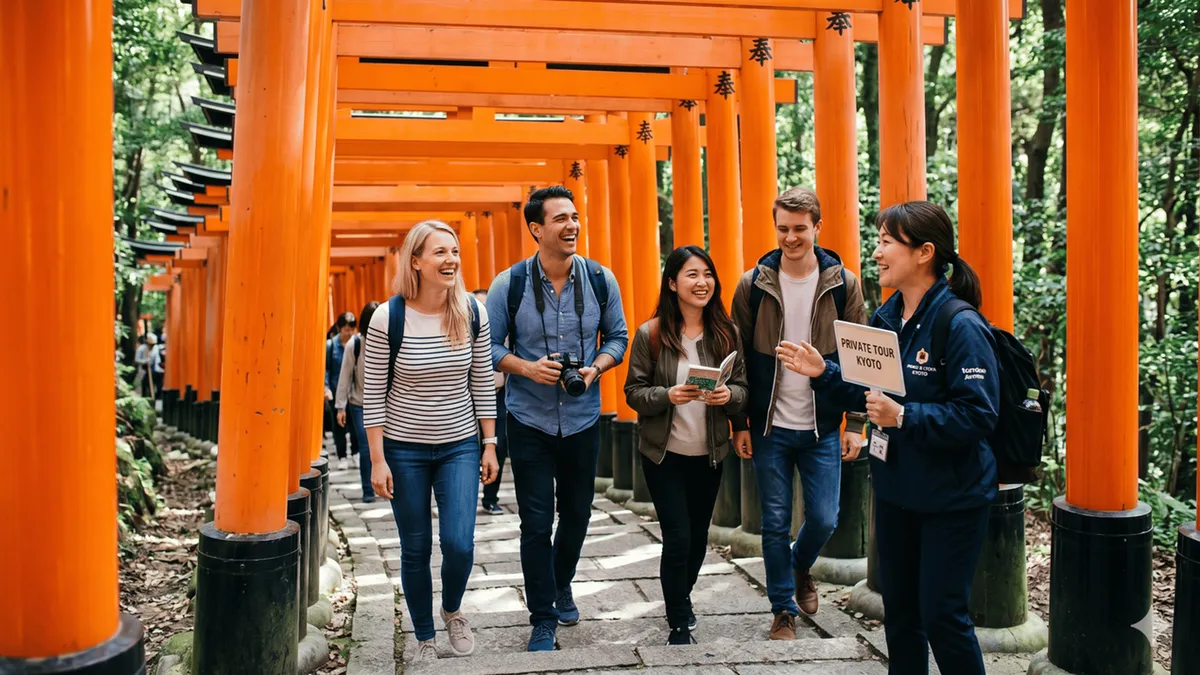
Kyoto Customized Private Tour in 1 Day with Licensed Guide
Listing details checked 2026-08-30
A nationally licensed guide for four, six or eight hours, with the route built around what you want to see. Walking and public transport, so it costs less than the vehicle option.
- Discover the best of Kyoto on a private guided walking tour
- Enjoy a personal and professional experience with a licensed local guide
- See some of Kyoto's most important and famous highlights
- Customize to your route or let your guide take care of the itinerary planning
 from $317.02
Kyoto: Private Customizable Day Tour with Guide and Vehicle
Listing details checked 2026-08-30
A private guide and a vehicle for the day, with hotel pickup — the answer for anyone travelling with mobility limits, small children or a very full list.
- Travel in a guaranteed clean, modern private vehicle
- Enjoy included hotel pickup and drop-off
- Explore Kyoto on a tour perfect for first-time visitors
- Ask about pickup and drop-off in Osaka or Kobe
 from $55
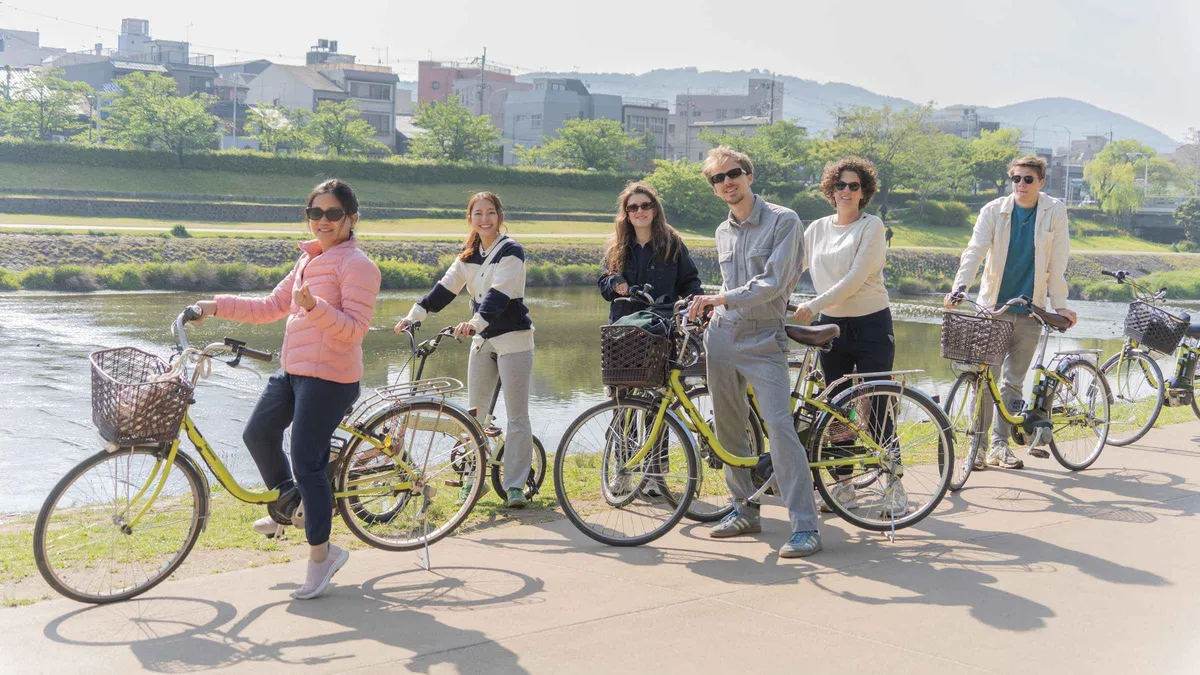
Kyoto: Morning Highlights E-Bike Tour
Listing details checked 2026-08-30
Two and a half morning hours by e-bike across Kiyomizu-dera, Gion and Fushimi Inari, entry tickets included. Covers ground on the hills that would cost you an hour on foot.
- Discover Kyoto's must-see sights without the crowds
- Enjoy a small-group experience for a personal touch
- Learn local history and cultural insights from a Japanese guide
- Cycle around Kyoto's highlights
 from $94.95
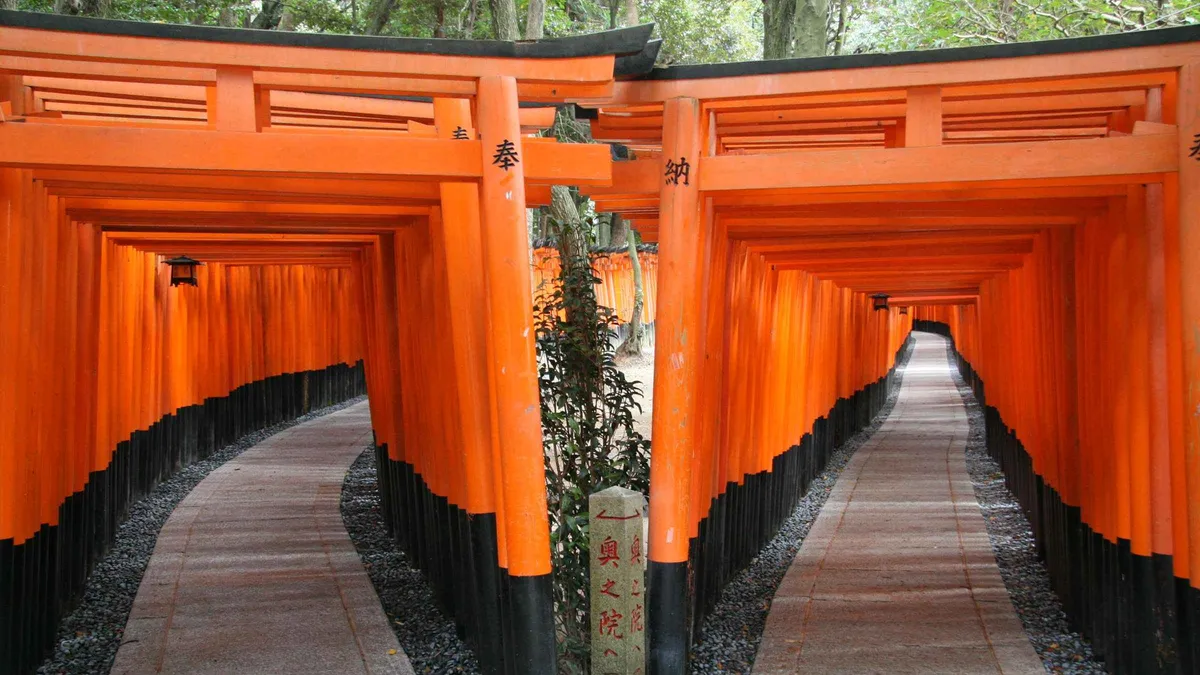
Kyoto: Fushimi Inari, Kinkakuji, Bamboo Grove 1-Day Bus Tour
Listing details checked 2026-08-30
The all-in coach day: Kiyomizu-dera, Sanjusangen-do, Tenryu-ji, the bamboo grove, Kinkaku-ji and Fushimi Inari with entry tickets and a Japanese buffet in one 8.5-hour run. The most reviewed Kyoto tour on the platform.
- Visit Fushimi Inari Taisha and walk through its iconic thousand torii gates
- Stroll through Arashiyama’s famous bamboo forest and enjoy its peaceful scenery
- Discover Kiyomizu-dera and the Golden Pavilion, in one unforgettable journey
- Benefit from a professional English-speaking local guide
The Kodo: twenty-one statues arranged as a diagram
This is the reason to pay, and it is the least visited great room in Kyoto.
Kukai — Kobo Daishi, the monk who brought Shingon Buddhism from China and gave Japan its esoteric tradition — was granted this temple in 823, and he did something unusual with its lecture hall. Instead of hanging a painted mandala he built one: twenty-one statues arranged in three groups on a single platform, buddhas in the centre, bodhisattvas to the east, wrathful kings to the west, guardians at the corners. The arrangement is a diagram of the cosmos you can walk around.
Sixteen of the twenty-one are originals from the 830s. They are enormous, dark with age, and lit dimly enough that your eyes take a minute; the wrathful kings in particular are as forceful as anything in Japanese art. The Kondo next door holds a Yakushi triad of 1603, and the contrast between the two halls — Heian intensity against Momoyama grandeur — is the visit in one sentence.
The pagoda, and why you usually cannot go in
The five-storey pagoda is 55 metres, the tallest wooden tower in Japan, rebuilt for the fifth time in 1644 after a run of fires and lightning strikes. The interior — a painted chamber around the central pillar, itself treated as a buddha — opens only during special periods, four of them in 2026. Outside those windows you see it from the pond, which is where the famous photograph is taken from anyway.
The 2026 opening calendar, in full
To-ji runs on a season schedule rather than fixed opening: what you can enter depends entirely on the date. This is the temple's own published 2026 calendar, read on 30 August 2026.
Read the calendar before you fix the date, because two of the things people come for — the pagoda interior and the treasure hall — are shut for most of the year.
| Dates in 2026 | What is open | Note |
|---|---|---|
| 1–8 January | Halls, Kanchi-in, pagoda interior | New Year special opening |
| 9 January – 18 March | Halls, Kanchi-in, pagoda interior | The "Kyo no fuyu no tabi" winter season |
| 14 March – 12 April | Halls, plus night illumination | Evening cherry-blossom opening |
| 19 March | Halls and Kanchi-in | Regular opening resumes |
| 20 March – 24 April | Halls, Kanchi-in, treasure hall | Spring exhibition |
| 25 April – 25 May | Halls, Kanchi-in, treasure hall, pagoda interior | The fullest window of the year |
| 28 April – 10 May | Halls, plus night illumination | Fresh-green evening opening |
| 26 May – 19 September | Halls and Kanchi-in | Regular opening — no pagoda, no treasure hall |
| 20 September – 30 October | Halls, Kanchi-in, treasure hall | Autumn exhibition |
| 31 October – 25 November | Halls, Kanchi-in, treasure hall, pagoda interior | The autumn peak |
| 31 October – 13 December | Halls, plus night illumination | Autumn colour, lit |
| 26 November – 13 December | Halls, Kanchi-in, pagoda interior | Late autumn |
| 14–31 December | Halls and Kanchi-in | Regular opening |
The temple notes that special openings may also run outside the spring and autumn seasons, and that dates and prices can change — so the calendar above is a plan, not a promise. It also warns that the combined ticket's reception closes earlier than the halls: 16:00, or 15:30 when the treasure hall is included.
The 21st: Kobo-ichi, the market for Kukai
Once a month the grounds stop being a temple and become the biggest flea market in the city.
Kukai died on the twenty-first day of the third month, and the memorial service held for him on the twenty-first of every month — the Miei-ku — grew a market around it. It still runs: over a thousand stalls on some months, filling the precinct with antiques, old kimono, tools, ceramics, plants, pickles and street food from early morning to about four in the afternoon.
It is free to walk, it is where Kyoto residents actually go, and it is the one day a month when the temple grounds are difficult to move through. If you are shopping for anything old, this and the Tenjin-san market at Kitano Tenmangu on the 25th are the two days that matter. If you came for the Kodo's statues in peace, come on any other day.
To-ji map: the pagoda, the halls and the station
The temple, the pond the pagoda is photographed from, and the two stations that serve it.
Next stop from To-ji
Walking times are our estimates; train times are the timetable.
Fushimi Inari
Free, never closes, and the natural continuation south — both are on the station side of the city.
About 10 minutes by JR from Kyoto StationSanjusangen-do
The 120-metre hall of 1,001 Kannon at $3.75 (¥600) — the other great sculpture room within reach of the station.
About 15 minutes by busNishiki Market
Lunch, and the covered arcade that has fed the city for four hundred years.
About 15 minutes by subway to ShijoTo-ji questions
How much is To-ji?
$5 (¥800) for the Kondo and Kodo halls, $3.75 (¥600) for Kanchi-in and $7.50 (¥1,200) for the combined ticket, with reductions for school-age visitors. The grounds, the Miedo and the Jikido are free. Figures are the temple's own, read on 30 August 2026; the schedule was last revised on 20 March 2025.
Can you go inside the To-ji pagoda?
Only during the special-opening windows. In 2026 those are 1 January to 18 March, 25 April to 25 May, 31 October to 25 November, and 26 November to 13 December. Outside them the pagoda is seen from the grounds — the full calendar sets out what is open when.
What time does To-ji open?
The gates open at 05:00 and close at 17:00 — four hours before most of Kyoto. The paid halls run 08:00 to 17:00 with reception closing at 16:30; Kanchi-in and the treasure hall open at 09:00. The combined ticket's reception closes earlier, at 16:00, or 15:30 when the treasure hall is included.
What is the market at To-ji on the 21st?
Kobo-ichi, the flea market that grew around the monthly memorial service for Kukai, who died on the twenty-first. Over a thousand stalls fill the grounds with antiques, kimono, tools, plants and food from early morning to about 16:00, and it is free to walk. The serious buying is done before 09:00.
Is To-ji worth visiting?
For the Kodo's twenty-one statues, yes — it is the best room of Heian sculpture in the country and it is never crowded. For the pagoda, check the calendar first, because the interior is shut for most of the year. And it is fifteen minutes from Kyoto Station, which no other temple of this rank can claim.
How do I get to To-ji from Kyoto Station?
Walk — it takes about fifteen minutes and is flat the whole way. Otherwise the Kintetsu line runs one stop to Toji station, five minutes from the gate, and several city buses stop at Toji-Higashimon-mae. How the fares and passes work.
Where To-ji fits in a Kyoto day
It is the station temple, and that is its whole strategic value.
Most visitors give the first and last hours of a Kyoto trip to luggage and transit. To-ji is fifteen minutes' walk from Kyoto Station, opens at 05:00 and takes forty-five minutes, which makes it the obvious thing to do on an arrival morning, a departure afternoon, or a day when the bags are in a locker and the room is not ready.
On the 21st it becomes a different plan altogether — an hour and a half at least, and a reason to change the day's order. The one-day route keeps it as the optional early stop before the eastern walk.
Page last reviewed 2026-08-30. Prices, hours and terms are set by the venue or operator and confirmed at checkout.
We may earn a commission if you book through one of our links, at no extra cost to you. Full affiliate disclosure